


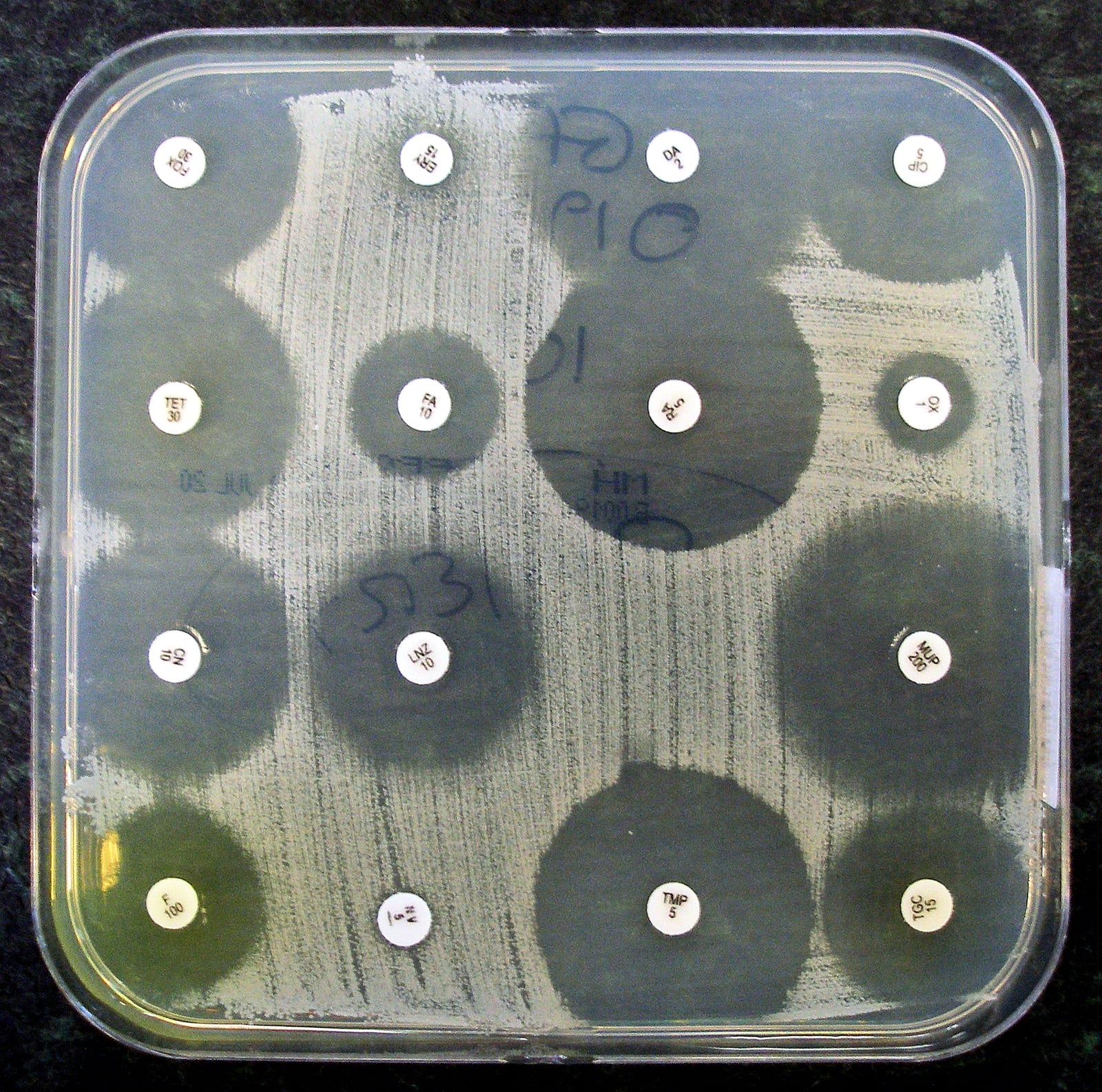
Dr Graham Beards / CC BY-SA 4.0
A warning against unnecessary antibiotics is easier to issue than a reliable diagnosis is to obtain. As World AMR Awareness Week begins on November 18, India should judge its response by whether patients can get the right care, not simply by how loudly it urges them to stop misusing medicines.
The World Health Organization estimates that one in six laboratory-confirmed bacterial infections causing common infections worldwide in 2023 was resistant to antibiotic treatment. That is a global estimate, not an Indian prevalence figure. It nevertheless makes a practical case for stronger laboratories and better prescribing support.
Responsibility cannot end at the pharmacy counter. A patient facing an expensive consultation or a distant laboratory needs a usable alternative to buying medicine on guesswork. Public clinics should make appropriate tests affordable, explain when antibiotics are unnecessary and provide a clear route back if symptoms worsen. Hospitals should review prescribing alongside local resistance patterns.
There is a serious counterargument: controls that slow treatment can harm patients, particularly where access is already poor. That concern should shape policy. Stewardship must not become a blanket requirement to wait for a test before urgent treatment. Clinicians need room to act, with timely review when more information becomes available.
WHO identifies poor water, sanitation and infection prevention among the factors worsening resistance. Funding those basics belongs in the same budget conversation as medicine controls.
For district health authorities, a useful next step would be to publish test availability, turnaround times and essential-antibiotic stockouts. Fewer prescriptions alone cannot tell us whether care has improved. Protecting antibiotics means making appropriate treatment easier to obtain.




