


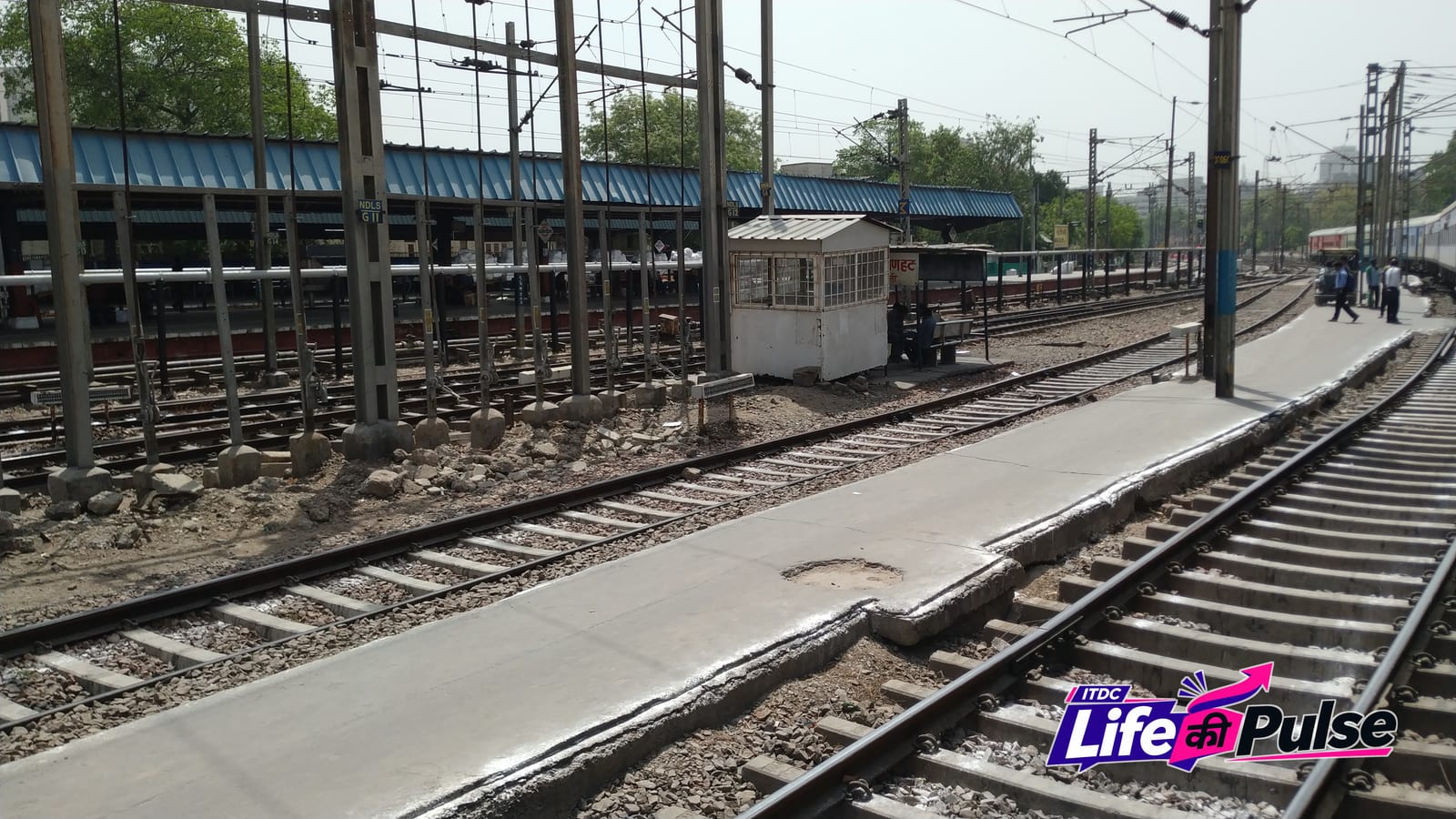
Ravi Dwivedi / Wikimedia Commons / CC BY-SA 4.0
At Rail Bhawan, the festive rush is arriving as live video: platforms, footbridges and station approaches, watched alongside train movements and delays. Outside that control room, a second form of scrutiny has emerged. Delhi High Court has told railway officials to document their crowd preparations before major events, following litigation over the New Delhi station crush that killed 18 people in February 2025.
The two developments landed within days of each other. Railway Minister Ashwini Vaishnaw reviewed the central war room on November 7. The Indian Express reported that officials can inspect individual camera feeds while coordinating responses across stations. The system joins crowd surveillance with operations data, putting a crowded bridge and a delayed train within the same monitoring operation.
Passenger experience remains uneven. Reports in The Times of India on November 8 and The Economic Times on November 9 described crowded coaches and boarding difficulties at several stations. These accounts show passenger strain, but do not establish how well the new arrangements are working across the network.
The Ministry of Railways puts daily footfall across five major Delhi stations at around eight lakh during November 1–5, against a usual average near five lakh. These are movements across the named stations, not eight lakh unique people at New Delhi alone. Its November 6 account also describes a reserved-passenger holding area and baggage screening moved outside the station building.
But extra services have brought a complication. The Pioneer reported on November 7 that railway officials attributed weaker demand for special trains to higher fares, longer scheduled journeys and delays. One senior official cited the difficulty of finding paths on high-density routes. These are attributed assessments, not a performance audit of every special train. They nevertheless expose a tension inside the relief plan: an available service and a practical alternative are not always the same thing.
The court's intervention concerns the preparations behind that pressure. In its November 4 report, The Times of India said the High Court required a nominated senior railway officer to review arrangements with Delhi Police and other agencies at least a week before an expected high-footfall event. A written record must be retained for scrutiny if something goes wrong. The petitioners said they had tickets but could not board amid the February 2025 crowd.
There is an older official commitment behind the new screens. In a March 2025 parliamentary reply, the ministry outlined holding areas, controlled access, wider footbridges and station war rooms. It also said station directors would be empowered to control ticket sales according to station capacity and available trains. Those were announced measures, not proof of completion at every station.
The present rush therefore sits between three records: what the cameras show, what the timetable delivers and what officials record before the crowd arrives. The November announcements describe the machinery now being deployed. They do not yet provide an independent station-by-station assessment of how quickly alerts become action, or how much extra capacity reaches the trains passengers actually choose.
Hashtags: #LifeकीPulse #IndianRailways #CrowdManagement #NationalIndia #NewDelhi #Railways #Watches #Crowds #Court #Wants




