


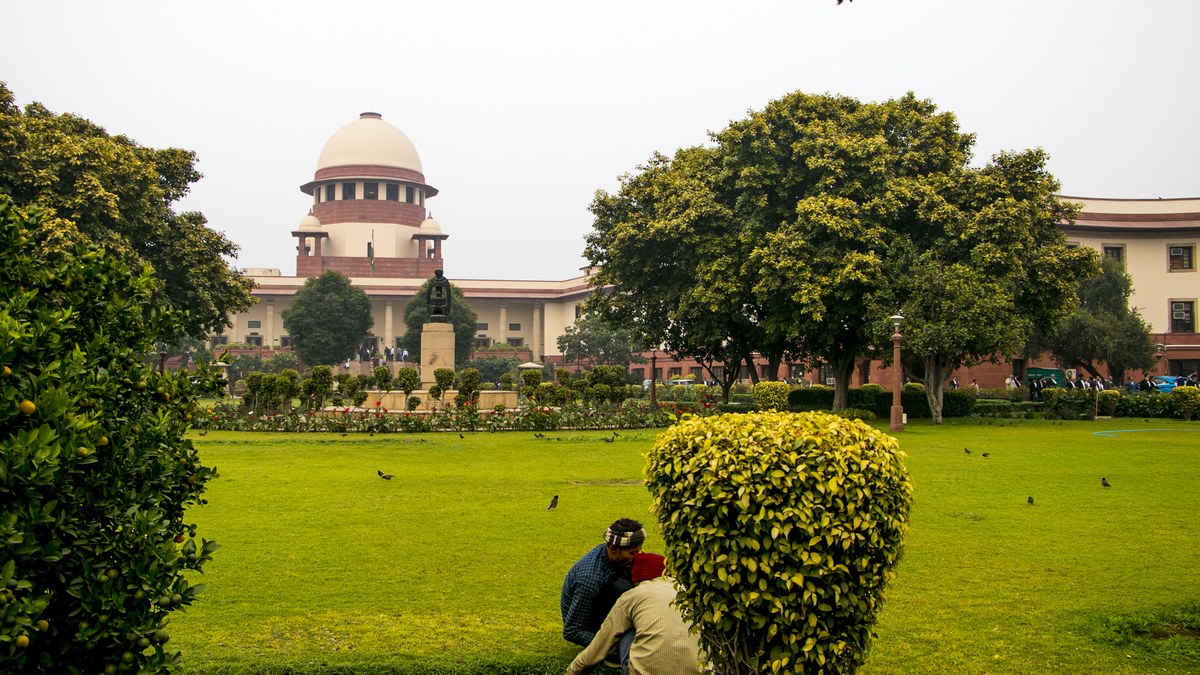
Subhashish Panigrahi / Wikimedia Commons (CC BY-SA 4.0). Cropped.
Government employees can be compulsorily retired on the basis of adverse remarks or below benchmark gradings in their confidential reports even if those entries were never communicated to them, the Supreme Court has held.
A bench of Justices Manmohan and Shree Chandrashekhar on 6 November upheld the compulsory retirement of employees of Chhattisgarh's Legal Metrology (Weights and Measures) Department in Raipur. The appellants had joined as peons in 1989 and 1993, were promoted to Assistant Grade-III in 2012 and 2013, and were retired in October 2017 after a service review ordered by the state's General Administration Department.
The court said compulsory retirement is neither punitive nor stigmatic and does not imply a finding of misconduct. For that reason, it said, the right to be heard and the protection of Article 311(2) of the Constitution do not apply to such orders made under service rules.
It rejected the argument that promotion wiped out adverse material. Entries recorded before a promotion may be treated as overlooked, the bench said, but entries about performance in the promoted post still count.
The court also turned down a discrimination claim. A screening committee had reviewed 14 employees under the same parameters, retiring five and keeping nine. The bench said judging each employee's record is an individual exercise, and Article 14 does not support a claim to "negative equality".
The ruling also sets limits for governments. A retirement decision must rest on objective and relevant material such as confidential reports and integrity assessments, not on conjecture or whim, and courts can still examine whether the prescribed norms were followed.
Hashtags: #SupremeCourt #ServiceLaw #GovernmentEmployees #सुप्रीमकोर्ट #सेवाकानून #सरकारीकर्मचारी #CompulsoryRetirement #ACR #Article311 #CompulsoryRetirementSupremeCourt




