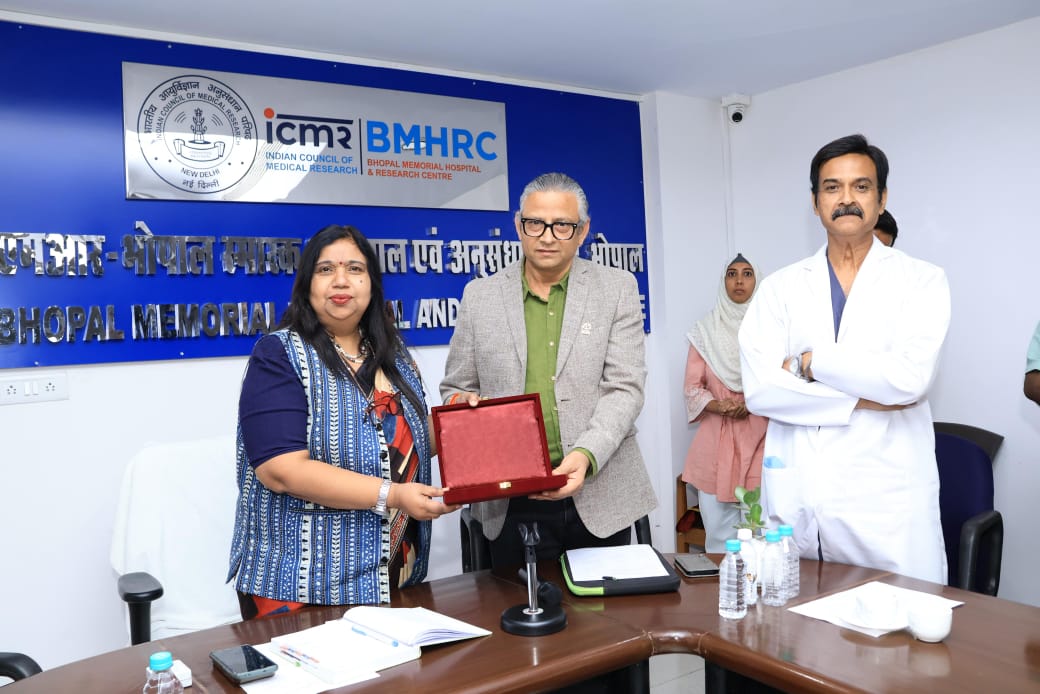
CNN Central News & Network–ITDC India Epress/ITDC News Bhopal: On the occasion of National Science Day, the Science Club was formally inaugurated at Bhopal Memorial Hospital and Research Centre (BMHRC), Bhopal. A special lecture series was organized to mark the event, featuring an in-depth discussion on recent advances in malaria vaccines and diagnostics.
The keynote speaker was senior scientist Kailash Chandra Pandey from ICMR-National Institute of Malaria Research, under the Department of Health Research (DHR). Delivering his lecture on recent progress in malaria vaccines and diagnosis, he explained that malaria remains a serious global health problem, transmitted through the bite of infected mosquitoes.
He stated that two institutes under the Indian Council of Medical Research (ICMR), along with the Department of Biotechnology, are jointly working to develop solutions to break the chain of infection. According to current research, nearly 25 percent of malaria parasites in Africa cannot be detected through gene diagnosis, whereas in India the figure ranges between 5–10 percent. To address this challenge, scientists are working on identifying alternative gene and protein markers that can be used in rapid diagnostic tests.
He further informed that vaccines for malaria prevention are being developed at two stages: the mosquito stage, where antibodies can reduce parasite growth by up to 95 percent, and the human liver stage, where immunity can be developed to prevent infection. The developed technology has already been transferred to a company, and clinical trials are expected to begin soon.
In-charge Director Manisha Shrivastava stated that the establishment of the Science Club in accordance with ICMR standards is a matter of pride for the institution. The program was attended by Sarika Katiyar, Ravindra M. Samarth, along with doctors and researchers.