CNN Central News & Network–ITDC India Epress/ITDC News Bhopal: At Bhopal Memorial Hospital and Research Centre (BMHRC), a Continuing Medical Education (CME) and patient awareness program on sickle cell disease was organized in collaboration with Parag Sagar Foundation. The objective of the program was to disseminate the latest information related to the identification, treatment, and management of sickle cell disease. During the event, free patient screening, expert consultations, and counseling sessions were conducted.
Dr. Manisha Srivastava, In-charge Director of BMHRC and Head of the Department of Transfusion Medicine, stated that the Government of India has set a target to eradicate Sickle Cell Disease by 2047. She highlighted the significant contribution of Mangubhai Patel in raising awareness in this direction. Dr. Srivastava emphasized that along with eradication, improving the quality of life of affected individuals is equally important. She noted that with proper treatment, regular medication, and a balanced lifestyle, individuals with sickle cell disease can lead normal lives. She also stressed the need to include blood disorders like Thalassemia in the education system and highlighted rehabilitation and physical activity as key components of disease management.
Dr. Ruby Khan, Deputy Director of the National Health Mission, stated that counseling plays a crucial role in preventing blood disorders like sickle cell disease. She referred to the “Sickle Cell Mitra” initiative, which encourages public participation in spreading awareness. She explained that if a child affected by sickle cell disease receives regular doses of Hydroxyurea according to body weight, adequate hydration, and a balanced diet, they can grow like normal children. She also emphasized avoiding excessive fatigue, ensuring regular care, and taking precautions. Patients with sickle cell disease should avoid traveling to high-altitude areas due to low oxygen levels, which can worsen their condition. If all preventive and treatment measures are followed, there would be little difference between a sickle cell patient and a healthy individual.
Expert Dr. Gaurav Dhingra from All India Institute of Medical Sciences Bhopal described sickle cell as a genetic disorder and emphasized the importance of timely diagnosis and treatment. He noted that symptoms include fatigue, breathing difficulty, and body pain, which can become life-threatening in severe cases. He warned that delayed treatment may lead to complications such as brain stroke, infections, and organ damage. He stressed the importance of regular medication, vaccination, annual check-ups, and adherence to medical advice.
During the program, Parag Sagar, founder of Parag Sagar Foundation, and Lalit Paragi shared their experiences, highlighting the importance of awareness, timely diagnosis, and a positive approach in disease management.
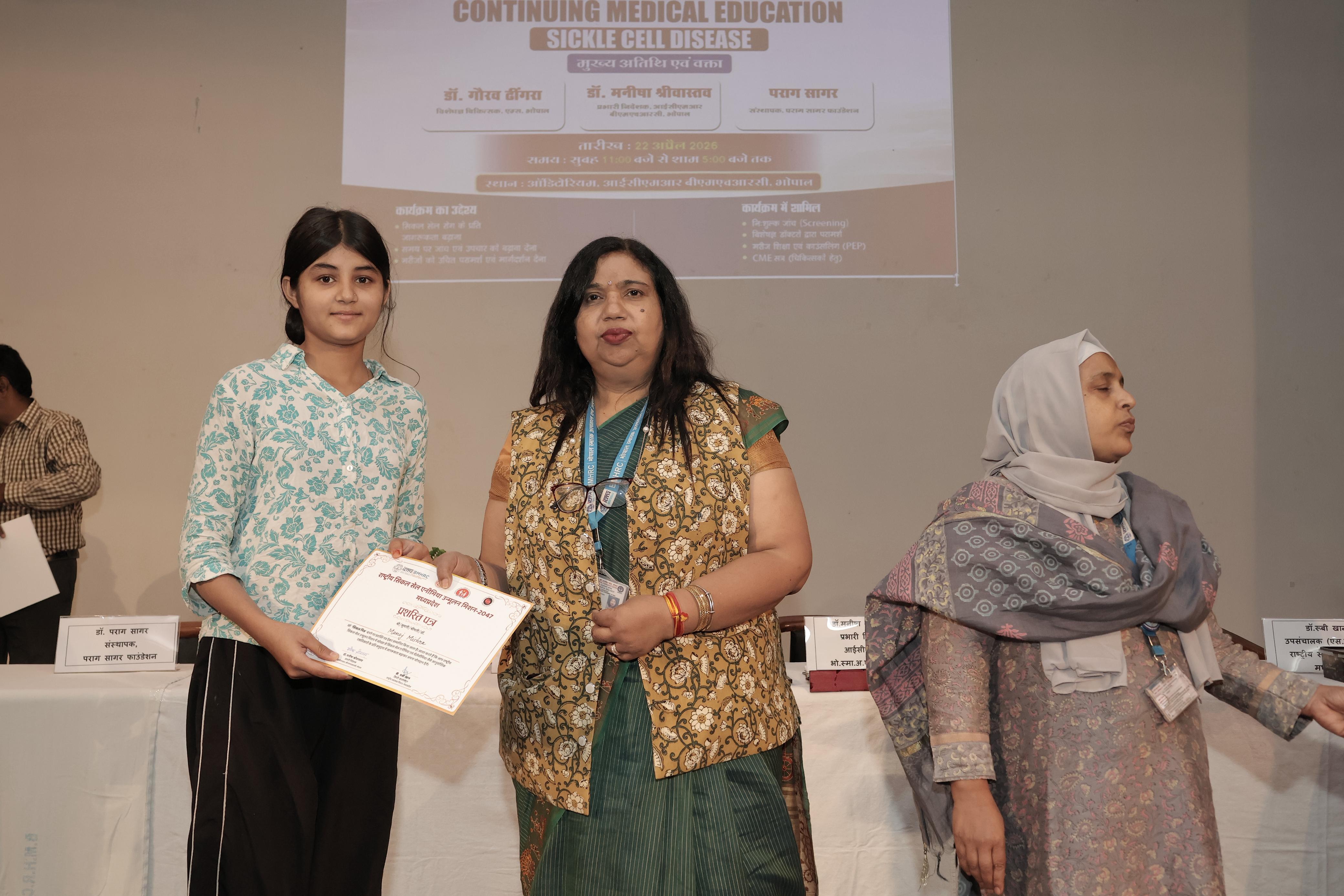
At BMHRC, comprehensive facilities for screening, counseling, and treatment are being provided through the Sickle Cell Competency Center, and screening camps are organized regularly. Certificates were also distributed to “Sickle Cell Mitras.”