


Ministry of Railways / PIB
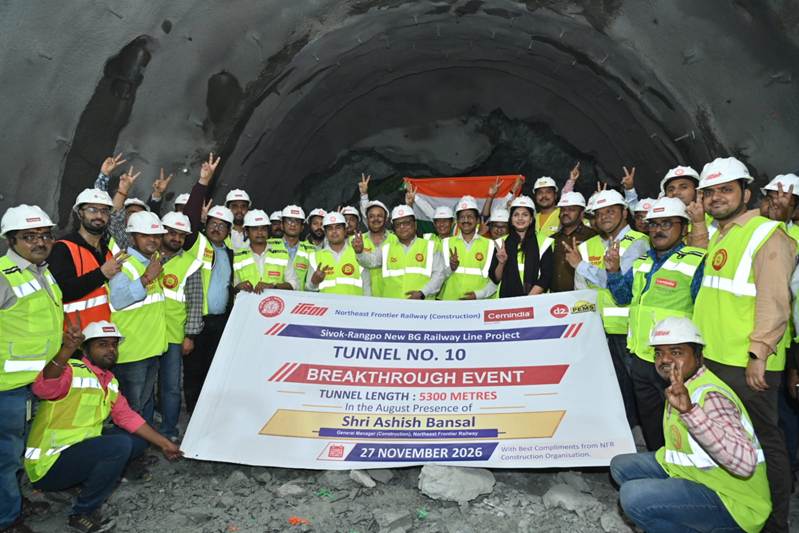
The tunnel crews met inside the Himalayas on 27 November. On the road above, Sikkim still depends on a corridor whose weak points have repeatedly demanded attention. The completion of excavation on the Sivok–Rangpo railway gives the state a prospect it does not have today: a second way to move people and goods between Rangpo and the plains.
Indian Railways said the teams excavating the 5.3-km Tunnel 10 met after working from both ends and through two access tunnels. It was the last of the 14 tunnels on the 45-km line to finish excavation. IRCON’s 2025–26 annual report had recorded 12 of the 14 as complete at its earlier reporting point. The route runs through Darjeeling and Kalimpong in West Bengal and Pakyong in Sikkim; almost 86% of it is in tunnels.
The reason an alternative matters is visible in the state government’s own road planning. In August it reviewed a vulnerable section of National Highway 10 at 20th Mile and told officials to keep the Samardung road usable as an alternate when needed. That was an August intervention, not evidence of a closure this weekend. But it shows how quickly a problem on one stretch can make an alternate route important.
At Sivok the new line is meant to join the existing New Jalpaiguri–Alipurduar route. Rangpo, Melli, Riyang and Sivok are planned stops, with an underground halt at Teesta Bazaar. The Railway Ministry’s update gives no passenger opening date. It says lining, track and safety installations still need work. For traders, visitors or families travelling now, the milestone changes the project’s prospects, not today’s transport options.
Hashtags: #LifeकीPulse #Sikkim #IndianRailways #SivokRangpo #NationalIndia #Rangpo #First #Rail #Link #Takes



