CNN Central News & Network-ITDC India Epress/ITDC News Bhopal: The real meaning of India’s development becomes meaningful only when its benefits reach villages, towns and remote areas. For a long time, the same challenge existed in the fields of education and technology. There was a time when computer education was limited to metropolitan cities and select institutions. For most young people in rural and semi-urban areas, access to modern technical education was a difficult dream. At such a time, some people did not merely accept the circumstances but resolved to change them.
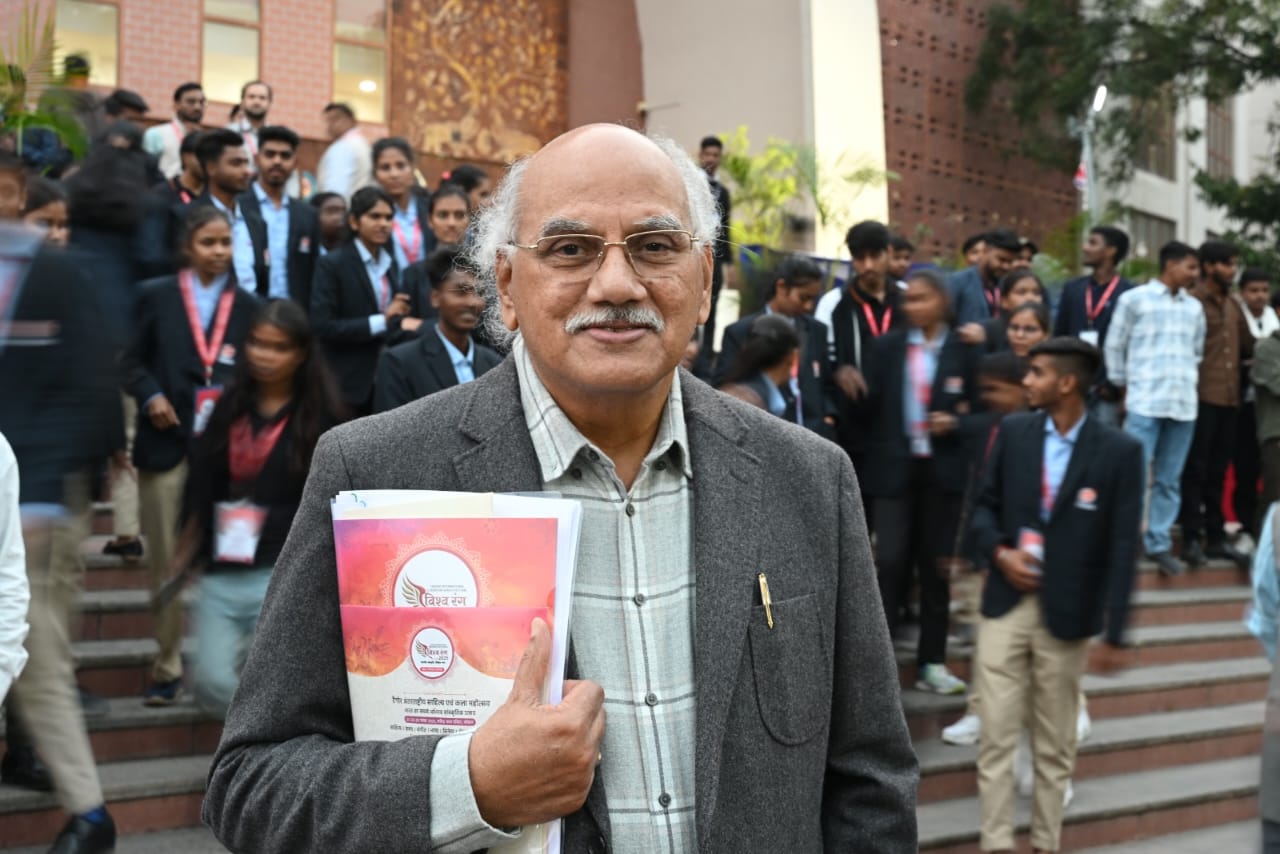
One such visionary personality was senior educationist, litterateur and thinker Santosh Choubey. In 1985, he founded the All India Society for Electronics and Computer Technology (AISECT) with the belief that India’s future would be strengthened only when the benefits of education, technology and skills reached villages and the last person in society. For him, education was not merely a means of obtaining a degree, but the foundation of self-reliance, social change and nation-building. This thinking later became the core inspiration behind AISECT’s work culture, expansion and development journey.
Putting this vision into practice, the first training centre was established in Bhopal in 1986. It was not just a teaching centre, but an important step towards the democratisation of technical education in rural India. The organisation trained local youth and made them trainers, creating new opportunities for employment, leadership and confidence at the local level along with education.
Gradually, this effort began turning into a wider social initiative. AISECT proved that if modern education is linked with local needs and community participation, change can reach even remote areas.
From education to skills, from skills to self-reliance
The year 1995 proved to be an important milestone in AISECT’s development journey. During this period, the organisation expanded its work and developed the concept of multipurpose training centres. These centres brought together education, skill training, employment guidance and community development activities. As a result, training centres were no longer just educational institutions but began developing as centres of local development.
At the same time, by adopting the authorised centre model, local entrepreneurs and youth were associated with the organisation. This increased public participation in the expansion of education and also created new opportunities for self-employment at the local level in many areas. Through public awareness campaigns, society’s trust in technical education increased and acceptance of modern education in rural areas grew stronger.
To give a more organised form to its expanding area of work, AISECT Limited was established in 2003. With this, programmes related to education, skill development and technical training expanded in a more structured manner. This was the phase when AISECT moved beyond the limits of a training institution and established its identity as a broad model linking education, employment and social development.
Higher education, innovation and preparation for the future
After building a strong base in technical training and skill development, AISECT also made higher education an important part of its development journey. The objective was clear: to take quality higher education, which was largely limited to metropolitan cities, to states and regional levels so that students could access better opportunities in their own areas.
In this direction, Dr. C.V. Raman University was established in Bilaspur, Chhattisgarh, in 2005. This was followed by the establishment of Rabindranath Tagore University in Bhopal in 2010, AISECT University in Hazaribag, Jharkhand, in 2016, and Dr. C.V. Raman Universities in Vaishali, Bihar, and Khandwa, Madhya Pradesh, in 2018. Moving ahead, the establishment of Scope Global Skills University in Bhopal in 2023 gave a new direction to skill-based higher education.
Through these universities, education was not kept limited to obtaining degrees. Special emphasis was placed on skill development, research, innovation, industry-academia coordination and employment-oriented training. Keeping in mind the needs of changing times, efforts were made to create an academic environment that could provide students with practical competence along with knowledge.
During the same period, digital technology brought sweeping changes to the country’s social and economic life. The nature of education and services also changed rapidly. Keeping pace with this transformation, AISECT sought to expand access to modern facilities in remote areas through digital platforms, technical training and skill development. This gave many young people the opportunity to prepare themselves according to new technologies.
Four decades, one continuous commitment
The most notable aspect of this four-decade journey has been that AISECT made rural India the centre of development. While many educational initiatives remained limited to big cities, the organisation sought to build a base for education and skill development in villages, small towns and semi-urban areas. Providing opportunities to local youth, increasing community participation and linking education with self-reliance remained key features of this journey.
The adoption of a new identity as AISECT India in 2026 is the next phase of this continuous development. This change is not merely about a name, but is a symbol of the broader vision centred on the commitment to contribute to nation-building through future-oriented education, skills, innovation, research and digital empowerment.
Today, India is moving forward towards becoming a developed nation. At such a time, the role of education, skills and technology has become more important than ever. This four-decade journey strengthens the belief that when education is connected with the real needs of society, when opportunities reach villages and when young people get the chance to develop their talent, change does not remain limited to individual lives but becomes the foundation for the development of society and the nation as a whole.
With this belief, AISECT India’s 40-year journey today stands at a new milestone, where the rich legacy of experience, the needs of the present and the possibilities of the future are visible together. This journey is not only the story of the growth of an institution, but also the story of an India that is building its future with confidence through education, skills and innovation.
Hashtags: #MadhyaPradesh #Bhopal #AISECTIndia #RuralEducation #SkillDevelopment #SantoshChoubey #TechnicalTraining #HigherEducation #AISECTIndiaTransformedRural #MadhyaPradeshState