


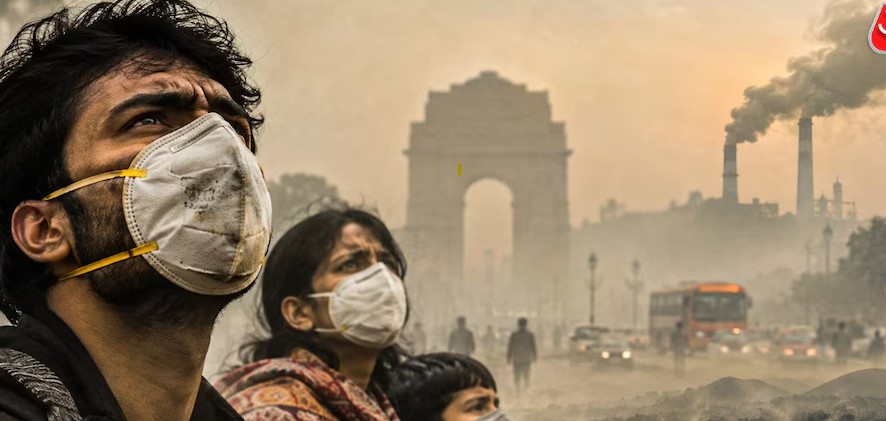
A study by Sweden’s Karolinska Institute has revealed how serious India’s air pollution crisis is. According to the research, around 38 lakh people died in the country between 2009 and 2019 due to causes linked to PM 2.5 pollution. The study is based on data from 655 districts in India. Researchers found that breathing polluted air over a long period steadily increases the risk of death.
The research was published in the prestigious medical journal The Lancet Planetary Health. According to the study, every 10 microgram per cubic metre increase in PM 2.5 levels in the air was associated with an 8.6 percent rise in the annual death rate. Under India’s national air quality standards, the annual limit for PM 2.5 is set at 40 micrograms per cubic metre. Exposure to pollution above this limit has been linked to 38 lakh deaths over 10 years.
WHO standard puts figure at 1.66 crore
The World Health Organization’s annual PM 2.5 standard is much stricter, at five micrograms per cubic metre. According to the study, if this standard is used as the basis, the estimated pollution-linked deaths between 2009 and 2019 rise to 1.66 crore. This is about 25 percent of all deaths during that period. However, these figures are estimates prepared on the basis of different pollution standards.
Small cities also in pollution grip
The study also identified Byrnihat, on the Assam-Meghalaya border, as a major pollution hotspot. The annual PM 2.5 level there was recorded at 133.4 micrograms per cubic metre, higher than Delhi’s 104.9. Researchers have warned that air pollution is not only a problem of metropolitan cities. Sustained and concrete steps are needed over the long term to control vehicles, industries and other sources of emissions.
Hashtags: #ScienceTechnology #Bhopal #Pollution #PM25 #Research #India #38LakhDeaths #KarolinskaInstitute #StudyLinksPollutionTo #साल



