


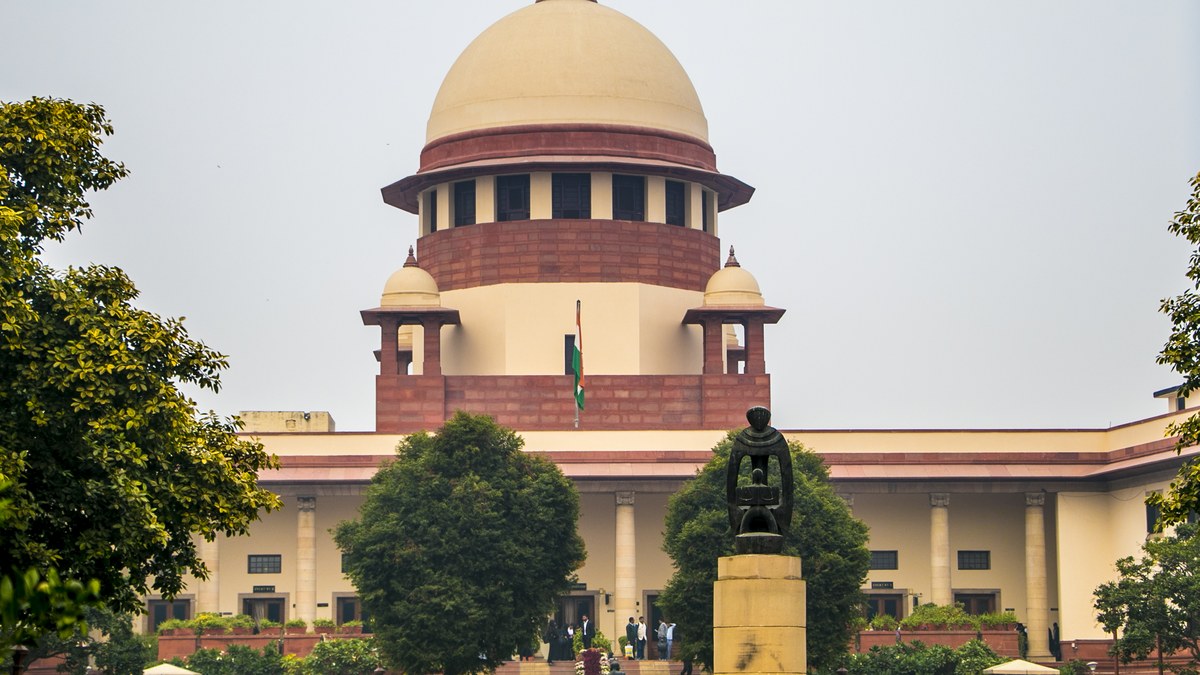
Subhashish Panigrahi / Wikimedia Commons (CC BY-SA 4.0). Cropped.
A life convict sent home from a British prison can ask for early release under Indian remission rules, the Supreme Court held on Wednesday, setting aside the Centre's refusal and a High Court order backing it.
Gurmej Singh was convicted of murder by the Crown Court at Birmingham in 2012 and sentenced to life with a minimum term of 35 years. He was transferred to India in May 2015 under the Indo-UK agreement on transfer of sentenced persons. After 14 years in prison he sought premature release. The Centre rejected the plea, and the Punjab and Haryana High Court upheld that decision in October 2023, holding that he had to serve the sentence imposed by the UK court.
A bench of Justices M M Sundresh and Prasanna B Varale disagreed, according to The New Indian Express. Article 10(2) of the agreement lets either country grant pardon, amnesty or commutation under its own laws, and the court read "other laws" to include remission policy. Remission, it said, does not alter the conviction. It only reduces the sentence.
The bench also relied on a Home Ministry letter of 20 June 2018 telling UK authorities that transferred prisoners would be subject to the remission policy of the appropriate government. The court noted it was undisputed that, had the offence been committed in India, Singh would have been eligible for consideration.
The Centre and Punjab argued that Article 8, on enforcing the foreign sentence, barred any reduction in his favour. The court said that article was not the key provision.
It did not order his release. The competent authority must reconsider his plea within eight weeks.
Hashtags: #SupremeCourt #Remission #Prisoners #Law #TransferOfSentencedPersons #IndoUKAgreement #LifeConvict #UKTransferredPrisonerRemission #LegalCrime #NewDelhi




