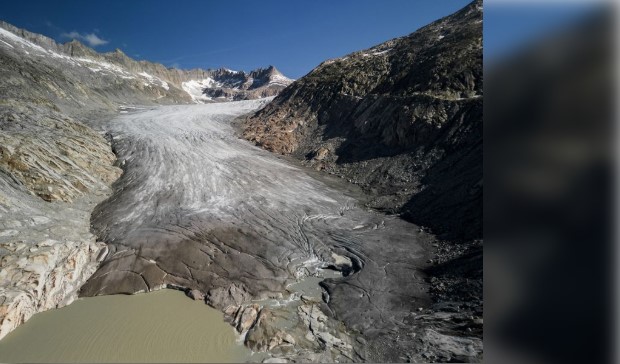
CNN Central News & Network-ITDC India Epress/ITDC News Bhopal: Swiss glaciers lost more than 5% of their ice volume in 2026, marking one of the most severe years of glacier melting on record. Data from the Swiss Glacier Monitoring Network (GLAMOS) and the Swiss Commission for Cryosphere Observation showed that intense heatwaves, dry conditions and unusually low winter snowfall contributed to the rapid ice loss.
The average thickness of individual glaciers declined by around 2.5 to 4 metres, while some glacier tongues lost as much as 10 metres during the summer. Switzerland’s total glacier volume has fallen by nearly 20% over the past five years, according to the monitoring data.
Winter 2025–26 was among Switzerland’s ten least snowy winters since measurements began. From May to September, every month experienced dry conditions and at least one heatwave. The freezing level remained above 4,000 metres for a record 76 days, more than twice the long-term average.
By September, protective snow had disappeared even at elevations of around 3,500 metres. Several glaciers, including Allalin, Clariden, Aletsch and Rhône, recorded their greatest melt on record. Switzerland’s largest glacier, the Great Aletsch Glacier, also experienced its biggest-ever annual melt.
Scientists estimate that Swiss glaciers lost around 2.2 trillion litres of water between July and September, temporarily helping to ease summer water shortages. However, researchers warn that this benefit will diminish as the country’s ice-covered area continues to shrink.
The latest figures underline the increasing pressure on Alpine glaciers from rising temperatures and changing snowfall patterns, with implications for future water availability and mountain ecosystems.
Hashtags: #ScienceTechnology #Bhopal #Desksource #Swiss #Glaciers #Lose #DeskSource #Over #Ice #Heatwaves