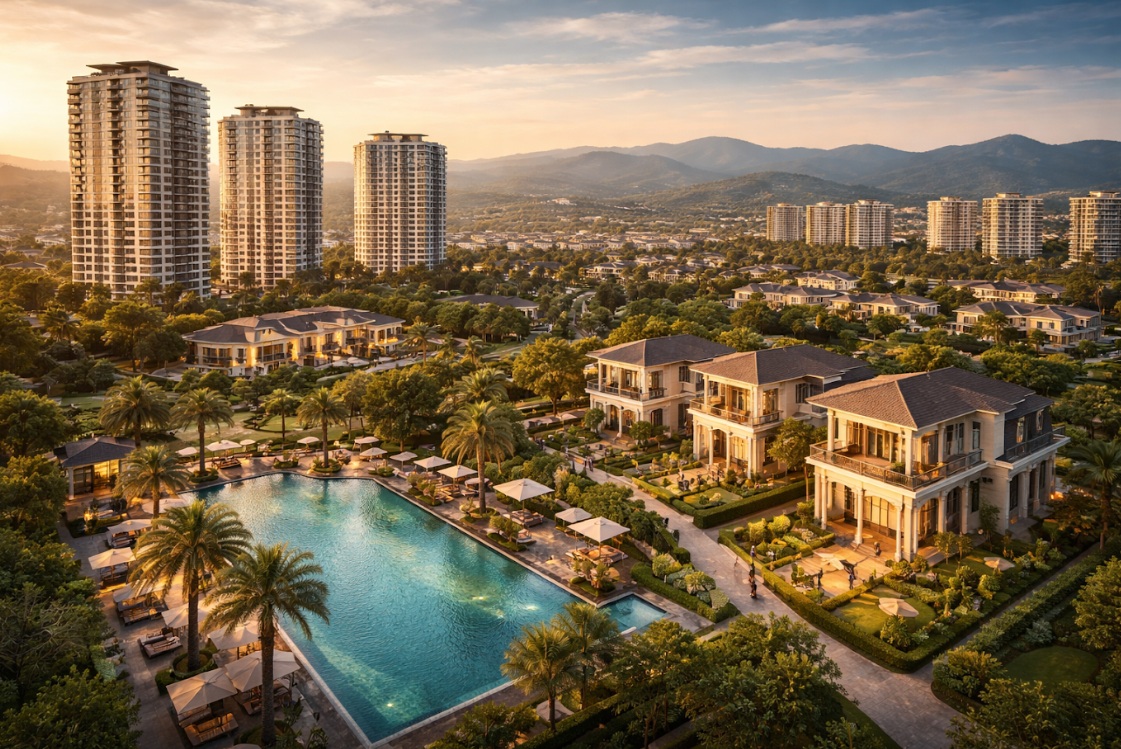
CNN Central News & Network–ITDC India Epress/ITDC News Bhopal: For years, the narrative of luxury housing in India has been defined by an aspirational drift toward metropolitan skylines. That axis is now reversing. Tier 2 cities are no longer only shedding their status of being merely ‘emerging’ to reveal themselves to be self-sustaining ecosystems of high aspirations where luxury is no longer merely an import, but an inherent attribute of their very fabric.
The fulcrum has shifted from salary-driven wealth to enterprise-driven prosperity, with family-owned businesses reaching unprecedented heights, startup success achieving significant exits, and SME and industrial clusters increasing their economic footprint in non-metro regions. No longer confined to a handful of urban centers, wealth in India is now far more dispersed geographically. This change in the distribution of wealth is having a significant impact not just on wealth itself but also on consumption. Today, there is a growing trend towards wealth being spent in the place in which it is created. This is in stark contrast to metros, where there may be a portfolio approach to wealth.
According to Anarock, premium and luxury homes now account for a significantly higher share of new residential launches in several tier 2 cities, showcasing how developers’ confidence in sustained end-user demand in these markets. The contours of wealth creation in these parts are also shifting with enterprise-led growth steadily overtaking traditional salary-driven accumulation. Across Tier 2 cities, family-run businesses are scaling with renewed ambition, startup ecosystems are unlocking meaningful value through exits, and SME as well as industrial clusters are deepening their economic influence.
Besides, a defining aspect of this shift is the clear dominance of the end user. In Tier 2 cities, demand is led by business families upgrading primary homes, next-generation buyers raising lifestyle benchmarks, and NRIs returning with global exposure yet strong local ties. Unlike metros, where luxury often aligns with investment logic and second homes, here it is rooted in end use. The focus is on high-conviction homeownership: consumption-backed, deeply personal, and centred on creating residences that serve as both lifestyle upgrades and long-term legacy assets.