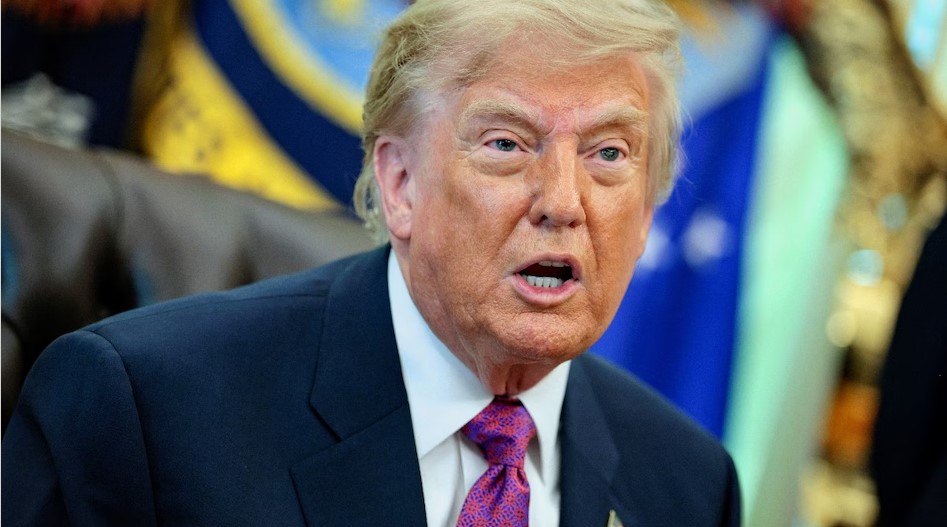
CNN Central News & Network-ITDC India Epress/ITDC News Bhopal: Tensions over interest rates in the United States have risen again between President Donald Trump and the Federal Reserve. Trump has taken a sharply aggressive position, demanding that the Federal Reserve cut interest rates. He warned that if rates are not reduced, the United States could stop trade with countries with which it has a trade deficit.
Why does Trump want interest rates cut? Trump argues that high interest rates put the U.S. economy at a competitive disadvantage. Lower interest rates can make borrowing cheaper for companies and consumers, which may encourage investment and spending. Trump has advocated one of the lowest interest-rate regimes in the world for the United States. He believes this would benefit American businesses and could also reduce the government’s borrowing costs.
A strong jobs report has complicated matters. Trump’s demand comes at a time when the U.S. employment report for August was much stronger than expected. In August 2026, the United States added 162,000 jobs, well above economists’ estimates. The unemployment rate remained at 4.1%. Strong employment data can raise concerns about inflation and strengthen the case for the Fed to raise interest rates rather than cut them. This is why market discussion has intensified over the possibility of a rate increase at the Fed’s September meeting. According to reports, after the strong employment figures, the possibility has increased that the Fed could adopt a tougher stance to control inflation.
Questions over the Fed’s independence have also resurfaced. The U.S. Federal Reserve is an independent institution that sets monetary policy. Interest-rate decisions are made mainly by considering inflation, employment and broader economic conditions. Setting rates on the basis of the president’s political wishes could affect the independence of the central bank. Trump’s pressure on the Fed has previously been a subject of debate in U.S. politics and the economy. This time, his threat to link trade policy with interest rates has made that debate more serious.
“Cut rates, or I will stop trade.” Pressuring the Fed on social media to reduce rates, Trump said the United States was suffering globally because of high interest rates. He also warned of stopping trade with countries with which the U.S. has a trade deficit. However, such action could have a major impact on global trade and the U.S. economy. According to experts, such a broad restriction on trade could damage economic activity and increase the risk of recession.
What happens next? Attention is now on the Federal Reserve’s September meeting. The Fed faces a strong labour market on one side and the challenge of controlling inflation on the other. In this environment, the clash between Trump’s demand for lower interest rates and the Fed’s independent monetary policy could become an important issue for the U.S. economy in the coming days.
Hashtags: #WorldInternational #Bhopal #DonaldTrump #FederalReserve #InterestRates #TradeDeficit #World #International #DeskSource #USJobsReport