


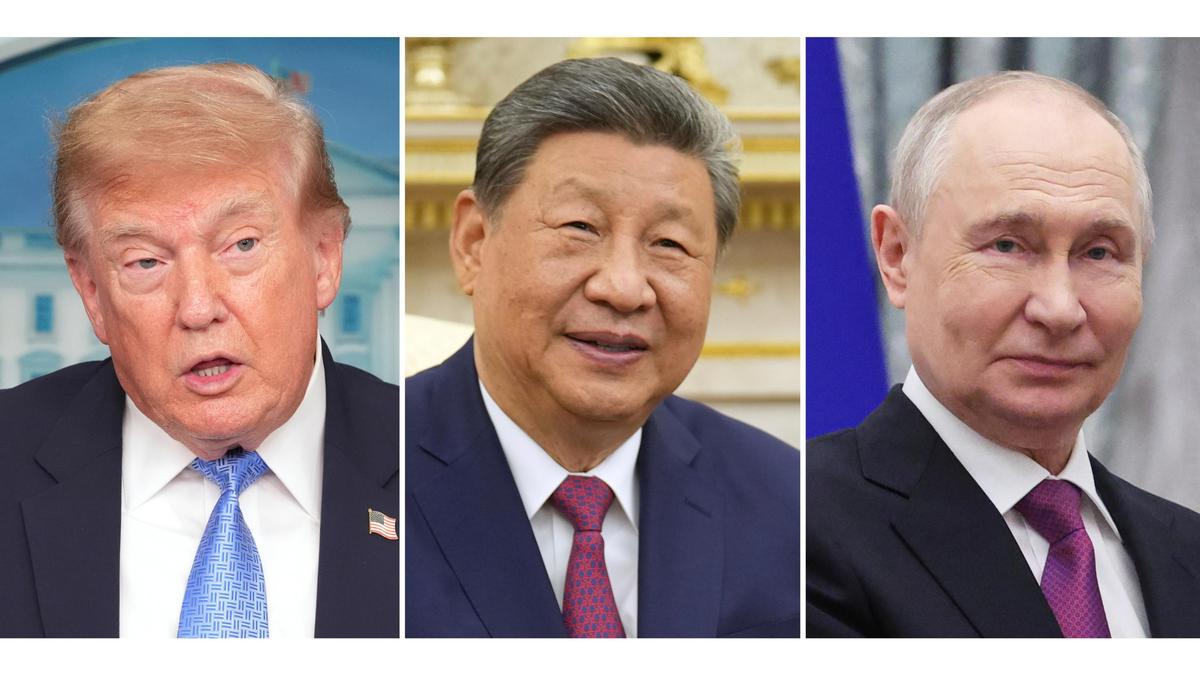
The historic meeting between US President Donald Trump, Chinese President Xi Jinping and Russian President Vladimir Putin in Shenzhen, China, on November 19 has raised important questions about the future of global geopolitics and India's strategic interests.
The trilateral meeting brings together three powerful nations with competing interests but significant influence over global security, trade and diplomacy. Discussions are expected to focus on nuclear arms control, the conflicts in Ukraine and Iran, and the changing international order.
For India, the development presents both opportunities and challenges. Russia remains a longstanding defence and strategic partner, while China continues to be a major regional competitor, particularly over border disputes and its growing influence in the Indo-Pacific.
Meanwhile, closer engagement between Washington, Beijing and Moscow could potentially affect India's diplomatic calculations. Any understanding among these powers on regional security, energy supplies or international trade could have consequences for New Delhi.
However, the meeting does not necessarily indicate the formation of an anti-India alliance. The three countries have significant differences, and their individual strategic priorities may limit cooperation.
India will need to strengthen its independent foreign policy, deepen partnerships with major economies and maintain strong defence preparedness.
The real concern for New Delhi is not the meeting itself, but whether these three powers begin shaping global decisions without adequately considering India's interests.
Hashtags: #NationalIndia #Bhopal #Trump #Putin #Meeting #China #Strategic #Threat #India #TrumpXiPutinMeeting



