


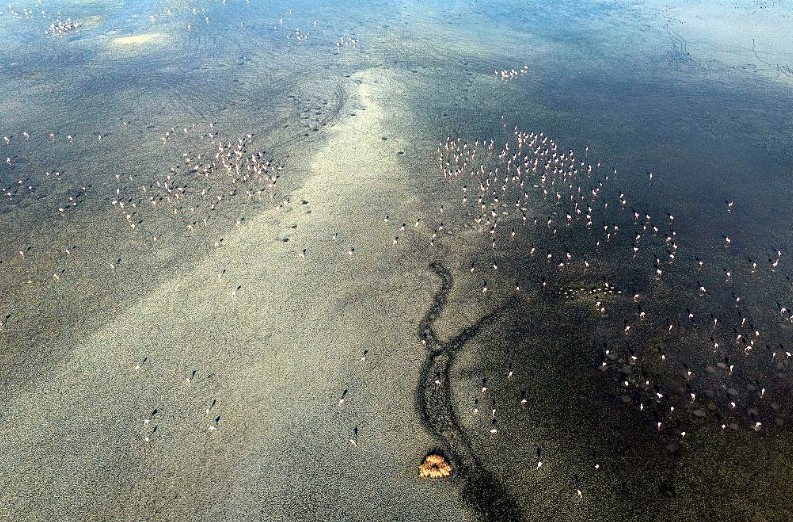
CNN Central News & Network-ITDC India Epress/ITDC News Bhopal: CNN Central News and Network – ITDC India ePress | ITDC News, Bhopal: Ankara. Turkey’s second-largest lake, Tuz Gölü, is facing a severe water crisis. The saltwater lake, located in the Central Anatolia region, is extremely important for both the country’s salt production and biodiversity. But low rainfall, rising temperatures and excessive use of groundwater for farming are steadily affecting its water level. In summer, a large part of the lake almost dries up, increasing the threat to the survival of flamingos and other birds that breed here.
Tuz Gölü’s key contribution to Turkey’s salt production: Tuz Gölü is located about 150 kilometres south of Turkey’s capital, Ankara. It is counted among the world’s highly saline lakes and provides nearly two-thirds of Turkey’s total annual salt production. Salt deposited along the lake’s shores is extracted and sent to processing centres, from where it is supplied to markets in the country and abroad.
The drying of the lake is not only an environmental problem. It could also affect jobs linked to salt production, the local economy and tourism. The area attracts tourists because of its natural beauty and the reflections visible in the water.
Low rainfall and groundwater extraction are major causes: Tuz Gölü is a shallow lake. In many places, its depth remains only about 50 centimetres. In summer, strong sunlight causes the water to evaporate rapidly. Low rainfall in the region and a reduction in water sources reaching the lake make the situation more serious. In addition, groundwater is being continuously extracted for irrigation in surrounding agricultural areas. In some places, the problem of drawing water by digging wells without permission has also come to light. This affects the natural sources that provide water to the lake. According to experts, the combined impact of drought and excessive groundwater use is weakening the lake further.
Threat to flamingo breeding grounds: Tuz Gölü is one of Turkey’s most important breeding sites for flamingos. In its shallow waters, they find food and suitable places to lay eggs. Reduced water can affect food availability, safe nesting and the chances of chicks surviving. In 2021, around 1,000 flamingo chicks died here during a water shortage. In recent years too, reports have emerged of drought affecting bird numbers and breeding. However, in 2026, after favourable rainfall, an improvement was recorded in the number of flamingo chicks. This makes clear that the lake’s ecosystem is highly sensitive to changes in rainfall and water availability.
What is needed to save the lake? According to experts, effective monitoring of groundwater extraction, saving water in irrigation and conserving natural water sources are necessary to protect the lake. At the same time, the availability of water in flamingo breeding areas and the condition of the birds will have to be monitored continuously. The crisis at Tuz Gölü is a sign that climate change and uncontrolled water use can together affect natural lakes, local livelihoods and wildlife. If water management is not improved in time, its impact could be seen from Turkey’s salt industry to the habitats of migratory birds.
Hashtags: #ScienceTechnology #Bhopal #Turkey #Tuz #Lake #Flamingo #Drying #Brink #Threat #TurkeySTuzLake



