


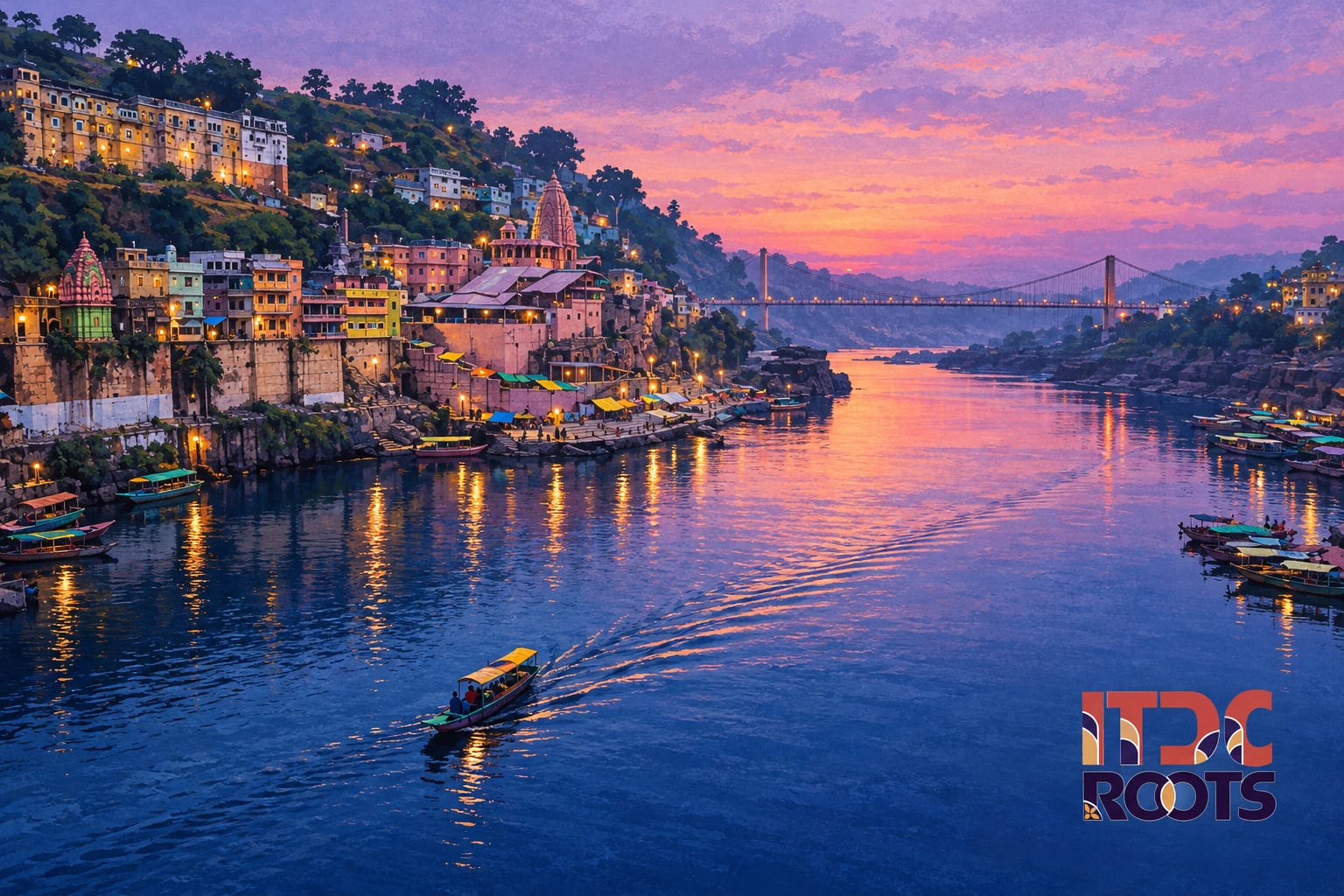
ITDC illustration
Omkareshwar’s island skyline can make the pilgrimage look self-contained. The temple rises above the Narmada, with steps and buildings crowded along the water. Yet an equally important part of its sacred geography lies across the river: Mamleshwar, also known as Amareshwar, on the southern bank.
Khandwa’s district account gives the two shrines equal religious standing within the Omkar-Mamleshwar tradition. The Omkareshwar temple trust likewise records that devotees visit both for worship. The river separates their buildings without separating their devotional significance. Understanding the place requires looking from one bank towards the other.
Mamleshwar adds a quieter historical detail to that relationship. Inscriptions on its walls include verses of the Shiva Mahimna Stotra, dated by the temple trust and Madhya Pradesh Tourism to 1063 CE. A hymn usually encountered through recitation is preserved here as writing on a building. The carved text supplies evidence of an older devotional presence beyond the island’s more familiar profile.
The shrine also received patronage associated with Ahilyabai Holkar. These later connections need not replace its earlier history; they show successive generations maintaining a place already considered sacred. The paired temples have their own material histories within a shared pilgrimage.
Crossing has consequently remained part of the practical experience of worship. The trust’s account of the bridges records the construction of Mamleshwar Setu in 2004 to serve increasing visitor numbers. A comparatively modern bridge may seem incidental beside an ancient shrine, but it helps sustain the movement linking the two banks.
Mandhata island is traditionally associated with the sacred syllable Om. That devotional reading of the landscape should not be confused with an exact geographical outline. The more tangible relationship is visible at river level: temple, crossing, opposite shore. Omkareshwar’s story continues beyond the island, in another ancient sanctuary whose walls carry a hymn to Shiva.



