CNN Central News & Network–ITDC India Epress/ITDC News Bhopal: Experts emphasized the need for concrete initiatives to empower India and transform it into a developed nation through AI-based skill development and financial inclusion. They stated that the integration of technology, skilling, and financial access is the key to inclusive growth. These views were expressed during the उद्घाटन session on the second day of the 5th Samarth Bharat Conclave 2026, held at Kushabhau Thakre International Convention Centre.
The conclave, themed “Reimagining Impact: AI-Driven Skilling, Financial Inclusion and Social Enterprise for Viksit Bharat,” witnessed participation from representatives of banking, industry, and common service providers. The event was attended by Chief Guest Gautam Tetwal, Minister of State (Independent Charge) for Skill Development and Employment, Government of Madhya Pradesh; Santosh Choubey, Chairman and Founder of AISECT India; Special Guests C Saraswati, Chief General Manager, NABARD; Deepak Kumar Lalla, CEO of Indian Institute of Banking and Finance; Dr Siddharth Chaturvedi; Dr Sitesh Kumar Sinha; and Anurag Gupta.
In his address, Minister Gautam Tetwal said that the AISECT Group has played a crucial role in delivering the benefits of government schemes to the last mile through financial inclusion. He emphasized that skilling and financial inclusion will play a central role in achieving the goal of Viksit Bharat by 2047. Referring to initiatives like Digital India, Make in India, and Skill India, he highlighted the rapid integration of rural youth and women into the mainstream.
In his welcome address, Dr. Siddharth Chaturvedi stated that the organization has been working for the past 40 years to extend opportunities to the last person in society through education and skill development. He added that AISECT, now operating as AISECT India, has expanded its pan-India network to regions including Africa, the Middle East, and Germany, further strengthening its socio-economic impact through CSR partnerships.
Santosh Choubey, Chairman and Founder of AISECT Group, highlighted that the organization’s vast network operates across the country with a focus on reaching the most marginalized sections. He emphasized that real social transformation is possible through the integration of technology and education. He noted that AI-based skilling not only enhances employment opportunities but also promotes entrepreneurship, with special focus on women’s economic empowerment and social harmony.
- Saraswati, Chief General Manager of NABARD, stated that financial inclusion in India has reached a new phase where focus must now shift towards quality, sustainability, and impact. She emphasized the need to connect self-help groups and rural enterprises with digital platforms.
Deepak Kumar Lalla, CEO of the Indian Institute of Banking and Finance, highlighted the increasing demand for skilled human resources in the banking sector due to rapid digital transformation. He noted that the institute is providing advanced skills through various certification courses for banking professionals.
Manoj Kumar, General Manager at Local Head Office, Bhopal, emphasized the importance of the banking sector in achieving the goal of Atmanirbhar Bharat. He referred to schemes like Atal Pension Yojana, Pradhan Mantri Jan Dhan Yojana, and Pradhan Mantri Mudra Yojana, stressing that delivering financial services to the last mile remains a priority.
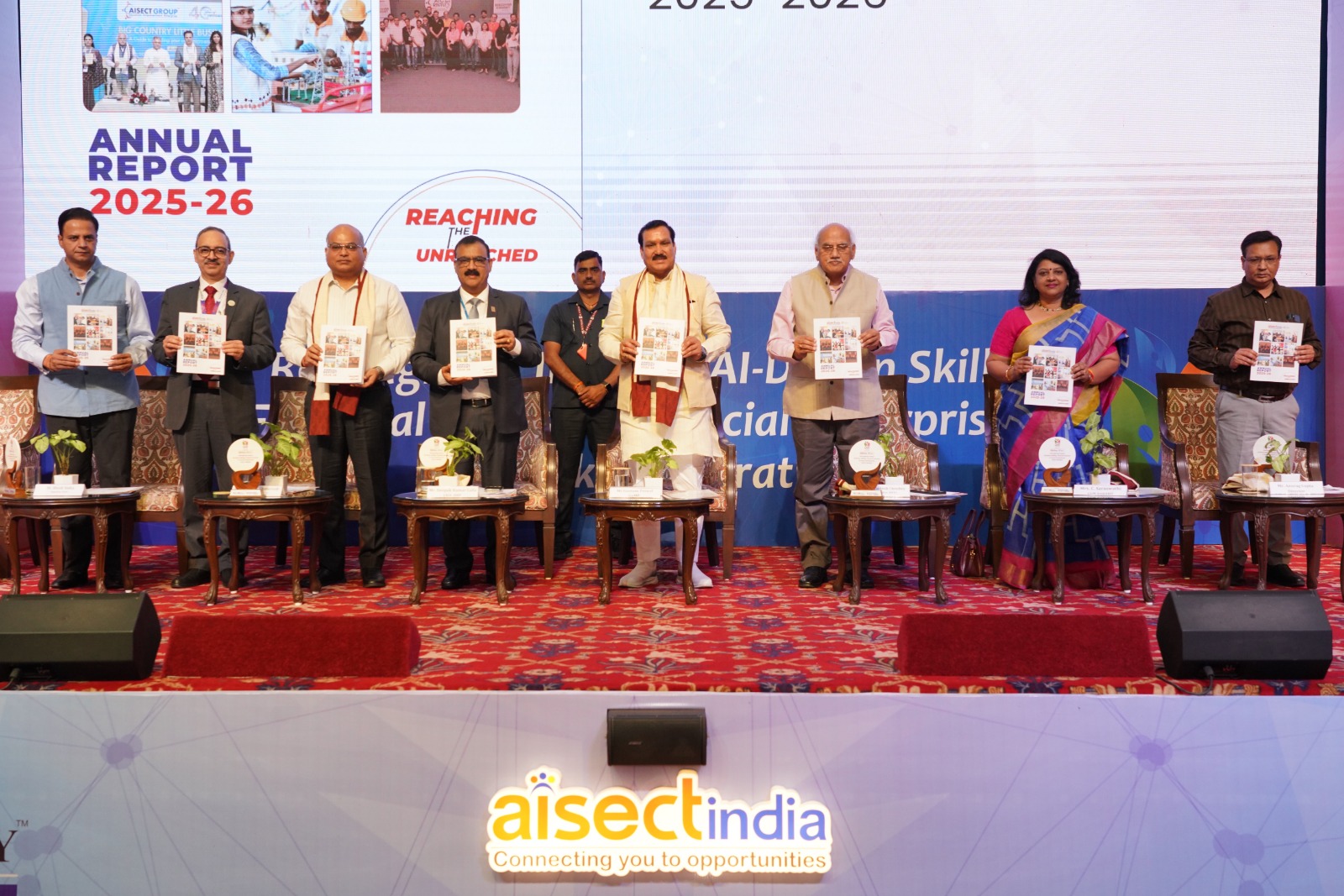
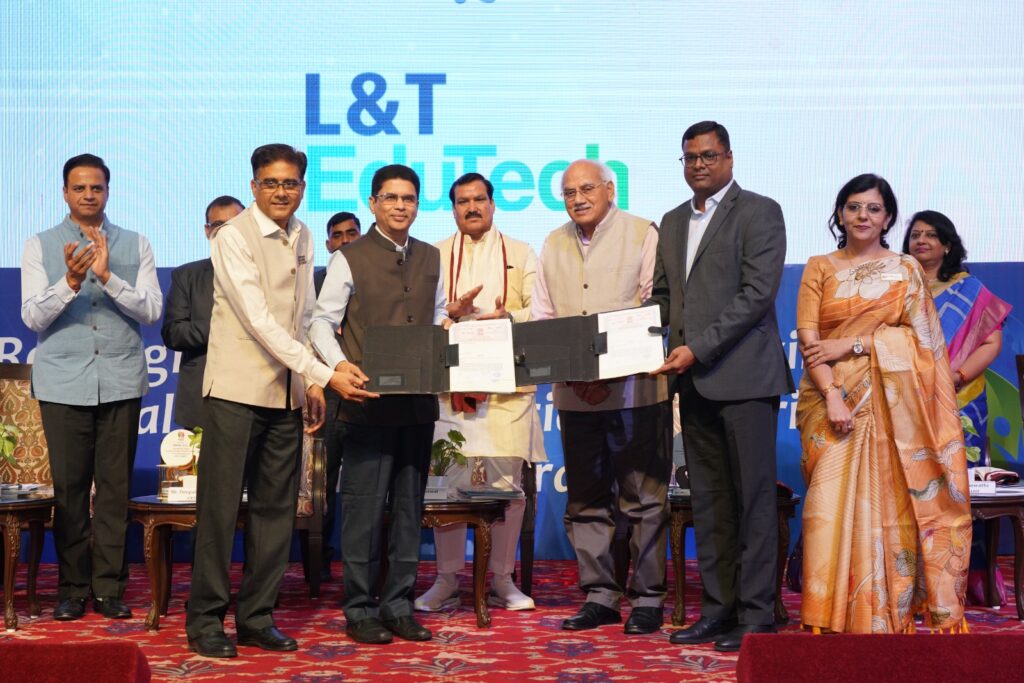
During the conclave, AISECT’s annual report, a brochure of success stories, and a booklet on skill development were released. Memorandums of Understanding (MoUs) were also exchanged between institutions, including collaborations involving Rabindranath Tagore University, L&T, Edutech, Redversity, IIBF, and Scope Global Skills University.
The second session featured a knowledge discussion where senior banking experts shared insights on financial inclusion, technological innovation, and the future of banking. State Bank of India DGM Jitendra Singh highlighted the long-standing partnership between AISECT and SBI, noting that it has enabled banking services to reach remote and underserved areas, with around 8.5 million accounts currently being operated. DGM Surya Prakash Rao from SBI Corporate Office, Mumbai, emphasized the importance of Customer Service Points as an effective means of delivering banking services at the grassroots level.
Mukesh Bharti Sharma, Deputy Zonal Head of Union Bank of India, outlined three key principles for Customer Service Point operators—punctuality, good customer behavior, and technical efficiency. Dheeraj Goyal, Regional Head of Central Bank of India and Convener of SLBC, emphasized the importance of coordination among banks and institutions for effective implementation of schemes. Shailesh Kumar Parakh, General Manager of Bank of Baroda, stressed the need for strategic growth and institutional strengthening in the banking sector.
In the third session, an MoU was exchanged between the Indian Institute of Banking and Finance and the AISECT University Group, enabling banking-related courses to be offered across all AISECT universities. The session was addressed by representatives from both institutions, including Chief Development Officer Bijay Kumar Jha from IIBF and senior officials from AISECT.
The fourth session focused on business opportunities in the field of financial inclusion, aimed at informing entrepreneurs about opportunities related to banking correspondent services, digital financial services, and expanding financial access in rural and urban areas.
The final session highlighted new opportunities for growth and income generation for entrepreneurs. It provided detailed insights into financial services, online citizen services, education, employment, insurance, innovative products, and emerging business models across various sectors.