


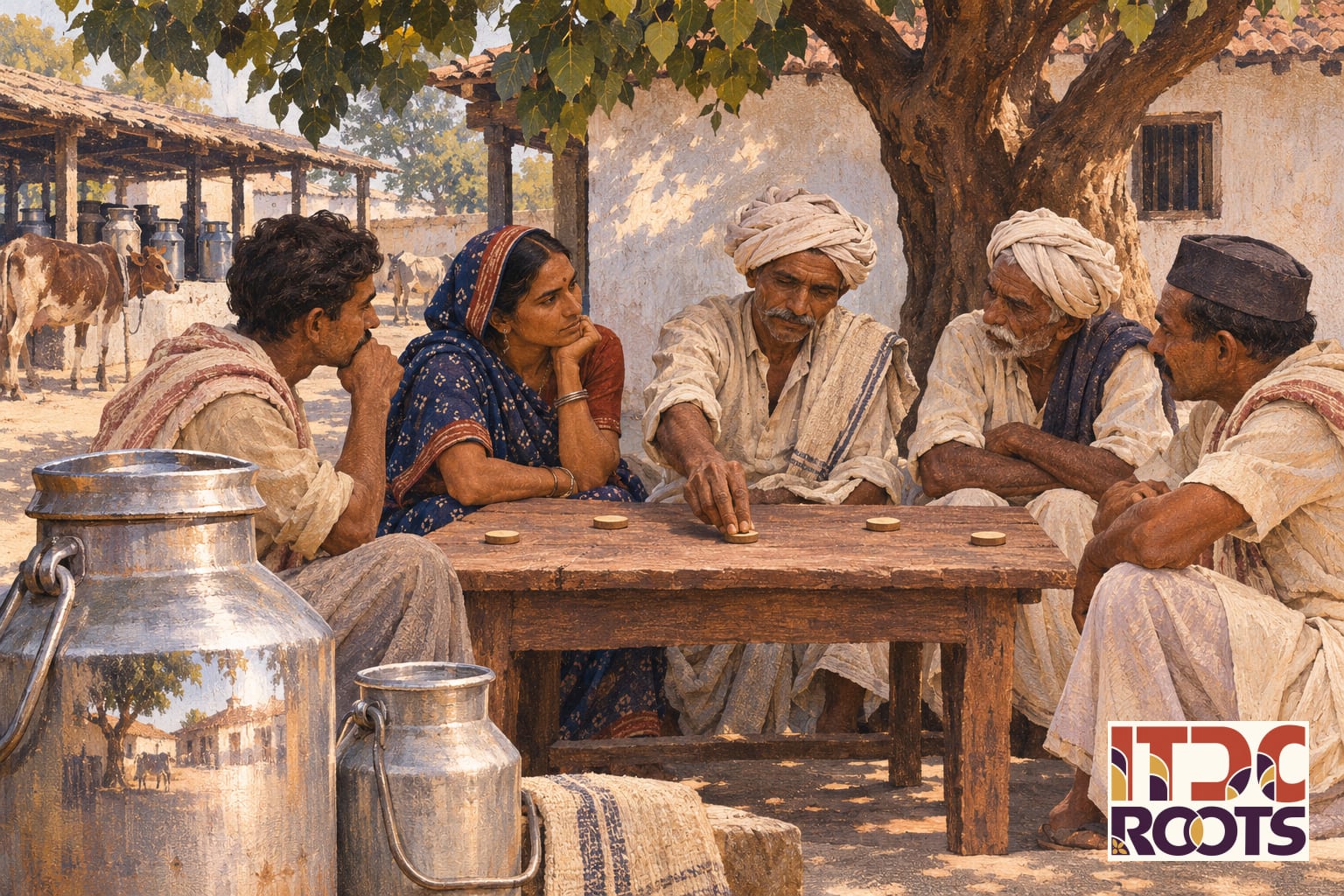
Illustration
A milk can carried produce. A vote gave its producer a say in the business.
In December 1946, farmers in Gujarat’s Kaira district established the cooperative union that became Amul. Tribhuvandas Patel, its founding chairman, had led their challenge to the trading arrangements around Polson Dairy.
The important change was not simply a new buyer. Village milk cooperatives formed the organisation’s base. Amul Dairy’s account of Patel’s work describes membership open to milk producers regardless of caste or community, with one member’s vote carrying the same weight as another’s, irrespective of wealth.
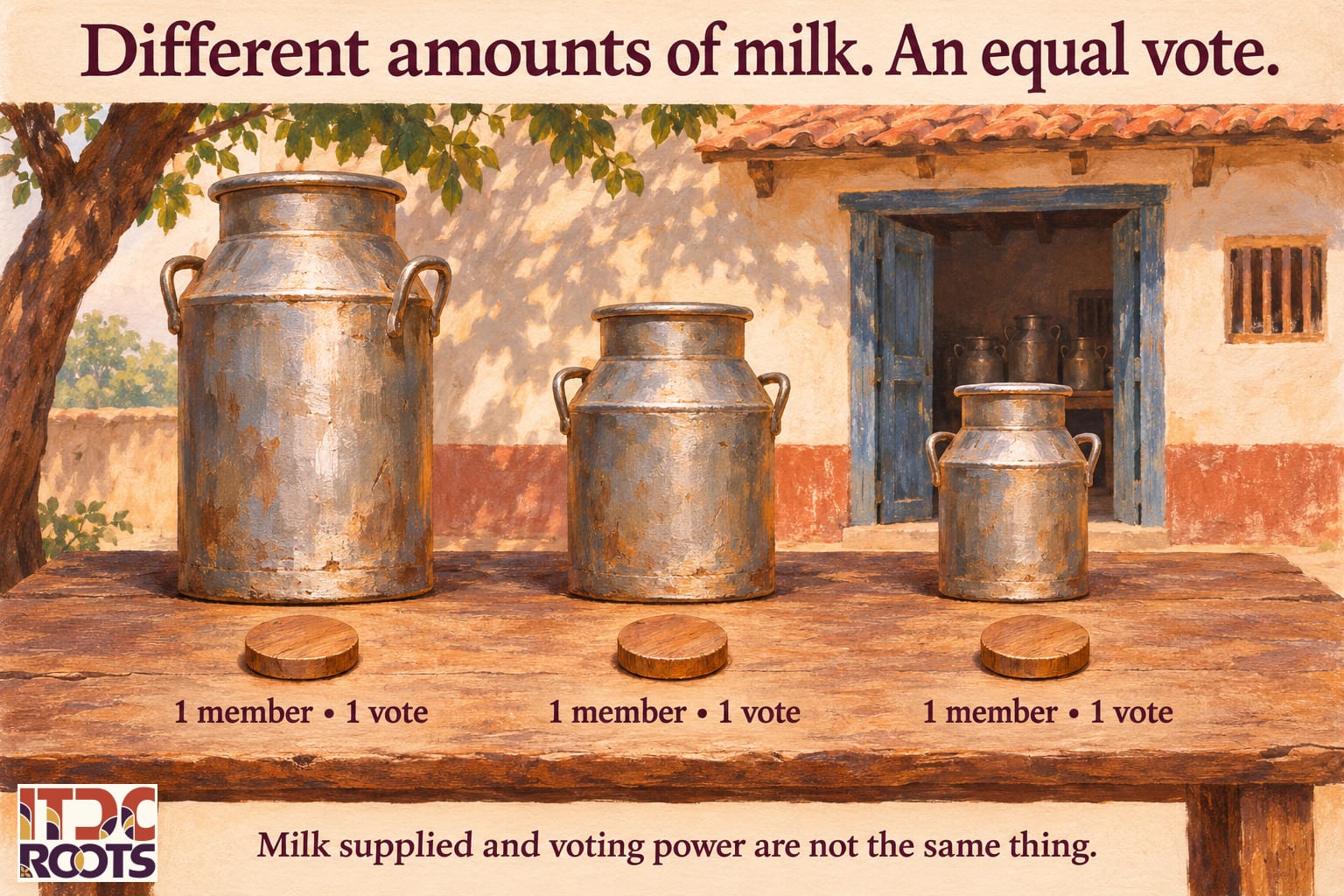
Farmers were building an organisation through which they could participate, rather than remaining only suppliers at its gate. The amount of milk a member brought did not determine the value of that member’s vote.
India’s later dairy transformation involved much more than this single founding moment. But the village cooperative supplied a durable starting point: the people producing the milk could also have a voice in the enterprise handling it.



