CNN Central News & Network–ITDC India Epress/ITDC News Bhopal: On a morning in New Delhi, the Bharat Mobility Global Expo buzzed with the familiar hum of India’s automotive giants. Visitors wandered between displays of combustion engines and gleaming show cars, the kind of scene Delhi has hosted for decades. But in one corner of the hall, the crowd slowed. Two premium compact electric SUVs sat under the lights, the VF 6 and VF 7, their sharp V-shaped signatures glowing long before anyone registered the name on the stand.
VinFast’s debut in India on Jan 17 of last year caught even veteran showgoers off guard. The company had brought right-hand drive versions tailored specifically for Indian consumers, a quiet signal that it was here with purpose, not testing the waters. Still, few in the hall recognized the badge. Amid the hum of announcements and clicking shutters, one visitor leaned toward a friend and asked, “Who are these people?”
That question did not hang in the air for long. In the weeks that followed, a group of Indian journalists traveled to Vietnam to see where the cars came from. What they discovered in the northen city of Hai Phong reframed everything.
“I had no idea VinFast is such a big group,” auto journalist Swati Agrawal recalled. “I saw the factory, the manufacturing plant, and not only cars, even scooters, buses, electric buses. Everything is being manufactured in one place. Three lakh cars per year. This is not a small brand.”
Her reaction points to a deeper story. VinFast’s sudden visibility in India is not merely an export push. It is the latest chapter in Vietnam’s own industrial transformation, one that has accelerated quickly enough to catch even Asia’s seasoned automotive observers off guard.
A 400-Acre Factory… From Nothing
By the time the expo lights dimmed, the next act of VinFast’s India story had already begun taking shape in Tamil Nadu months earlier.
To choose a location for its plant, the company surveyed fifteen sites across six states. Tamil Nadu, with its manufacturing-ready infrastructure and active support for green mobility initiatives, rose to the top. What happened next showed how the brand like to act. And it’s right there in the name: Fast.
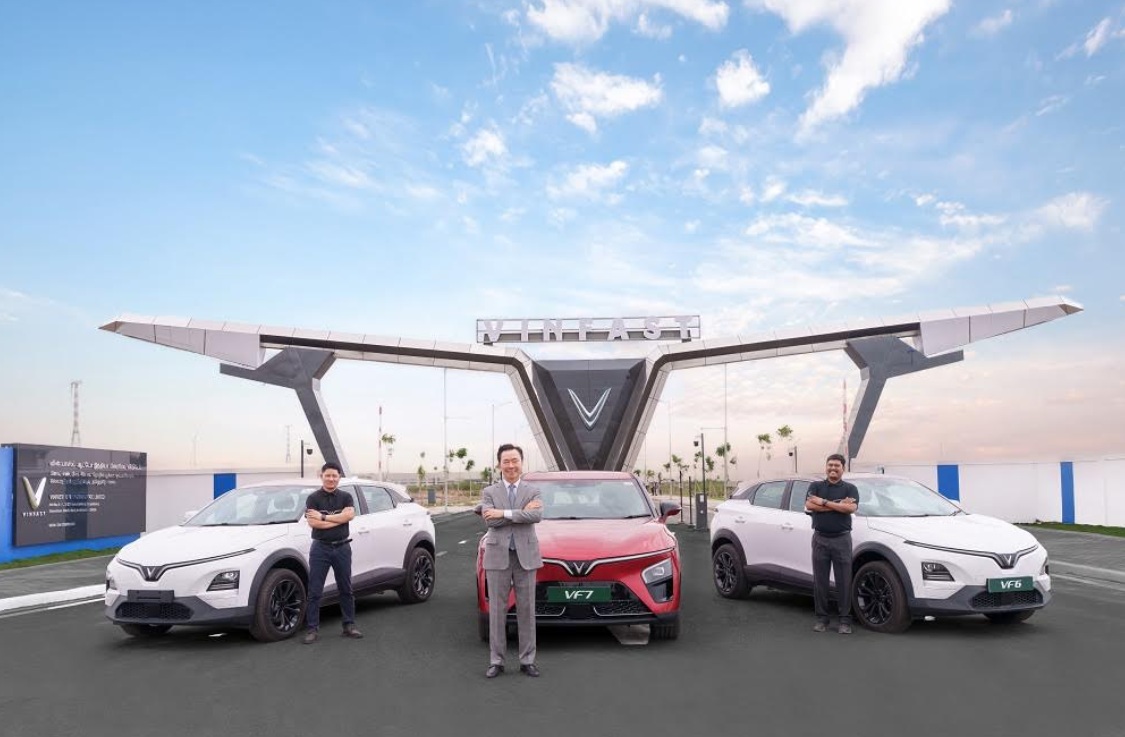
In late February 2024, when the groundbreaking ceremony began on a sun soaked, low lying tract of land near Thoothukudi, the site was still empty. By Aug 4, 2025, it housed India’s newest electric vehicle factory, a 400-acre complex with body shop, paint shop, general assembly, logistics warehouse, and supplier-ready zones.
“We entered India with nothing,” CEO Pham Sanh Chau said at the inauguration ceremony. “No land. No factory. No team. The only thing we had was a deep resolve and a belief that this area could become a leading hub for electric vehicles and auto components in South Asia.” He gestured to the plant behind him. “In just fifteen months, we transformed this land into a modern, highly-automated factory.”
When the first VF 6 and VF 7 rolled out that morning, they were the first VinFast vehicles to be made-in-India, by the hands and minds of Indian people, for Indian customers. “They are a symbol of the aspirations and resilience of the Indian people as they reach for a better, cleaner future,” Chau said.
The plant is expected to create 3,000-3,500 direct jobs and several thousand more across the supply chain as auxiliary partners move into the region. Suppliers have already expressed readiness to relocate workshops near the factory, a sign of confidence in Thoothukudi’s rise as an automotive production base.
#VinFast, #IndiaEVMarket, #ElectricVehicles, #EVAdoption, #SustainableMobility, #EVIndustryTrends