


Bhopal:
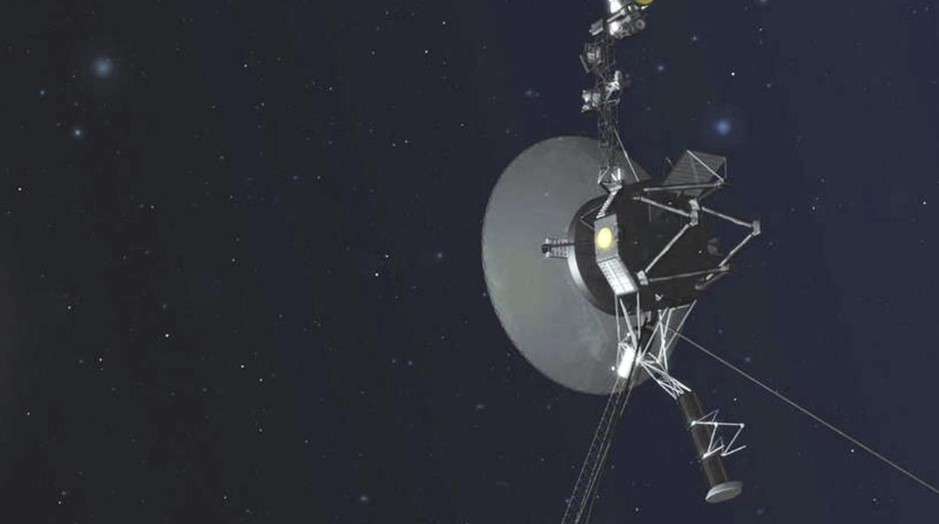
November 18, 2026, has become a significant date in the history of space exploration. NASA’s spacecraft Voyager 1 has reached a distance of one light-day from Earth, becoming the first human-made object to achieve this milestone. Launched in 1977, the spacecraft is now approximately 25.9 billion kilometres, or 16.1 billion miles, away from Earth after nearly 49 years of travel.
What Does One Light-Day Mean?
A light-day is a unit of distance, not time. Light travels at approximately 300,000 kilometres per second, covering nearly 25.9 billion kilometres in 24 hours. Voyager 1 is now so far away that a radio signal sent from Earth takes approximately 24 hours to reach the spacecraft. Its response takes another 24 hours to return. As a result, scientists must wait nearly two days to receive confirmation of the outcome of a command sent to the spacecraft.
A Historic Journey Since 1977
Voyager 1 was launched on September 5, 1977. During its journey, it studied Jupiter and Saturn before crossing the heliosphere, the region influenced by the Sun, in August 2012 and entering interstellar space. It remains the farthest human-made object from Earth.
The spacecraft also carries a Golden Record containing information about Earth's civilisation, languages, music and sounds. The record was designed to communicate a message about humanity to any potential extraterrestrial civilisation that might encounter it in the future.
According to NASA, Voyager 1 continues to transmit scientific data to Earth, although several of its instruments have been switched off to conserve its limited power supply.
The achievement represents far more than a distance record. It stands as a testament to human curiosity, scientific perseverance and the determination to push the boundaries of space exploration.



