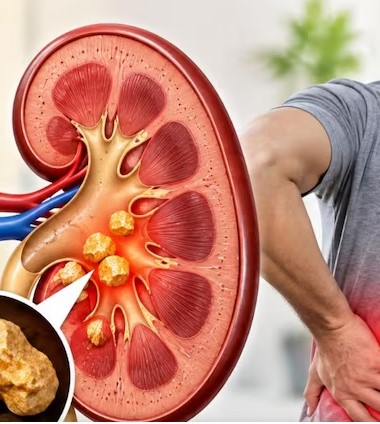
CNN Central News & Network-ITDC India Epress/ITDC News Bhopal: Kidney stones are a common problem, but treatment is not the same for every patient. When a stone is detected, doctors first examine its size, number, and location in the kidney or urinary tract. Ultrasound or a CT scan can help identify the stone’s position. Small stones can often pass on their own through urine without surgery. In such cases, doctors may advise drinking adequate water, controlling pain and, if needed, prescribing medicines that help the stone pass. However, forcing oneself to drink excessive water is not right in every situation, especially if the urinary passage is blocked.
If the stone is large, causing persistent severe pain, blocking the urinary tract, leading to repeated infections or affecting kidney function, a procedure or surgery may be required. Shock wave lithotripsy (SWL), ureteroscopy and breaking the stone with a laser are among the main treatment options. PCNL may be used for large kidney stones.
To prevent stones from forming again, it is important to take adequate fluids, reduce salt intake and maintain a balanced diet. However, do not decide on your own to completely stop calcium or oxalate in the diet. Based on the type of stone and urine tests, doctors can advise a personalised diet and medicines. If a stone is accompanied by fever or chills, inability to pass urine, persistent vomiting or severe pain that does not subside even with medicine, seek medical help immediately. A urinary blockage along with infection can be a serious condition.
Hashtags: #Health #Bhopal #Desksource #KidneyStones #Treatment #SWL #PCNL #DeskSource #Ultrasound #CTScan