CNN Central News & Network–ITDC India Epress/ITDC News Bhopal : Experts Call for Ban on Mercury-Based Medical Devices to Protect People and the Environment
In a strong appeal made today, consumer groups, public health experts, government officials, civil society organizations, and environmentalists urged for a complete ban on the use of mercury-containing medical devices—such as thermometers and blood pressure monitors—to safeguard human health and the environment.
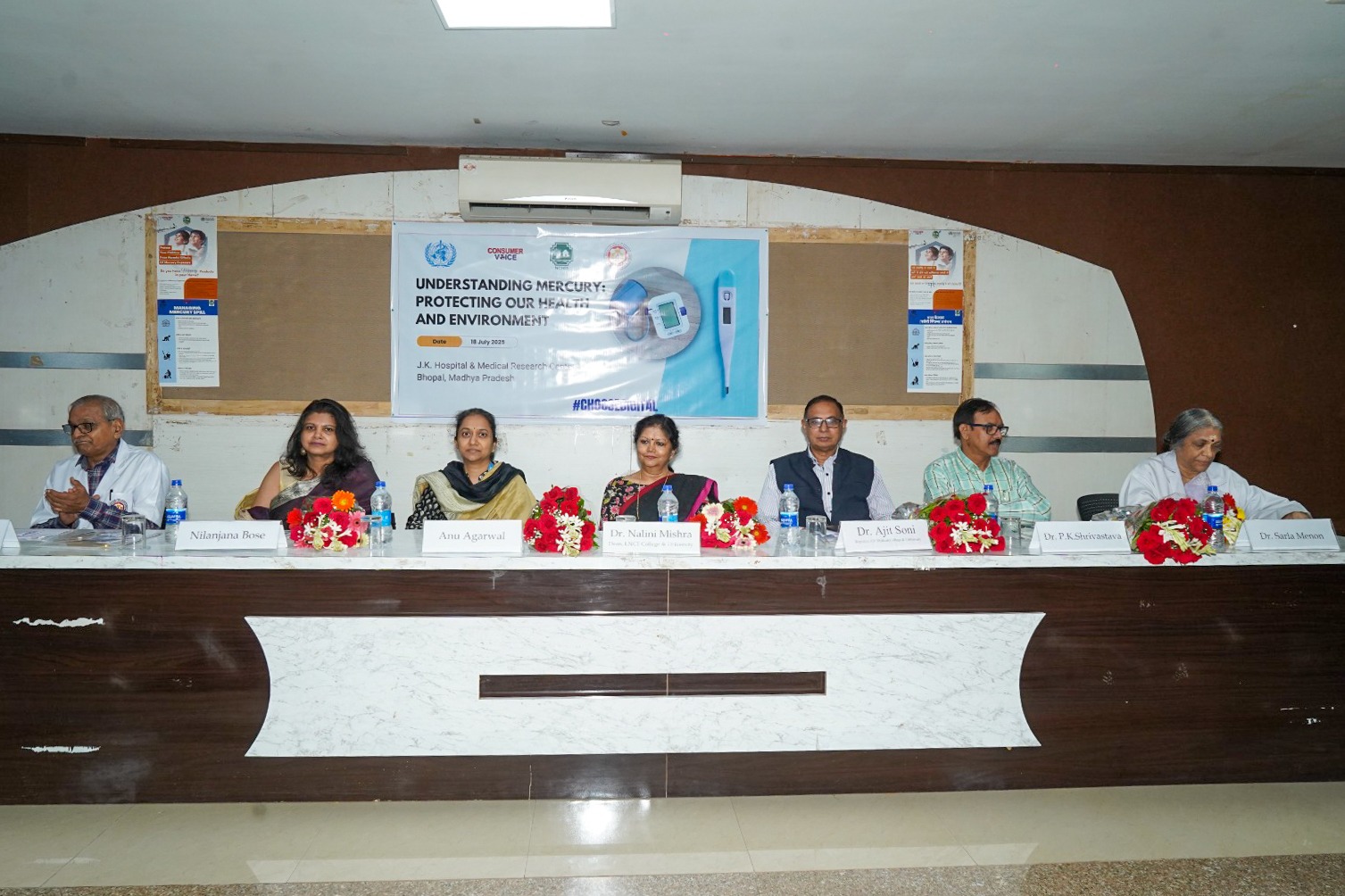
The appeal was made during a workshop jointly organized by Consumer VOICE and the National Centre for Human Settlements and Environment (NCHSE). Discussions focused on the health impacts of mercury—especially on children and women—and India’s commitment under the Minamata Convention.
Although mercury devices are considered safe until broken, once damaged or improperly disposed of, mercury vaporizes and spreads as toxic gas, which can be fatal when inhaled or absorbed through the skin. It affects the lungs, kidneys, and nervous system, and also contaminates soil, water, and the food chain, posing a widespread public health threat.
According to a 2011 report by Toxics Link, India releases around 8 tons of mercury per year from medical measuring devices, with 69% from improper disposal of sphygmomanometers (BP monitors).
Pradeep Nandy, Director of NCHSE, stated,
“India is a signatory to the Minamata Convention and has committed to phasing out mercury from medical devices. This international treaty aims to protect human health and the environment from mercury emissions and leaks.”
The World Health Organization (WHO) has listed mercury among the top 10 chemicals of public health concern, even in small amounts, as it severely affects the nervous, digestive, and immune systems, especially in children. In the environment, mercury transforms into methylmercury, a highly toxic compound, which bioaccumulates in the food chain and poses serious risks to unborn and newborn babies.
P.K. Srivastava, a scientist from the Madhya Pradesh Pollution Control Board, emphasized the need for strict protocols in hospitals and households to prevent mercury exposure and to transition towards digital, mercury-free alternatives.
“Today’s responsibility is to protect tomorrow’s generation,” he said.
Dr. A.K. Choudhary, Medical Director at J.K. Hospital, Bhopal, added:
“Mercury exposure can be life-threatening, especially for pregnant women and unborn children. Replacing mercury-based thermometers and BP machines with digital ones is not just life-saving—it also protects the environment.”
Other speakers included Nalini Mishra (Dean, LN Medical College), Ajit Soni (Registrar, LN City), and Sarla Menon (Medical Superintendent, J.K. Hospital). They stressed the urgent need for digital transition and strengthening waste management systems.
Nilanjana Bose, Project Head (Food & Nutrition) at Consumer VOICE, remarked,
“Digital devices are not only accurate but also affordable and accessible. The healthcare sector has started adopting them—it’s time every household makes the switch too.”
The workshop concluded with a clear message: Phasing out mercury-based medical devices and raising consumer awareness are vital steps towards protecting human health and conserving our shared environment.
The workshop, held at J.K. Hospital & Medical Research Centre, saw participation from over 150 attendees, including youth, women, consumers, and civil society representatives..
#LNMedicalCollege, #MercuryFree, #EnvironmentalHealth, #MedicalWorkshop, #SustainableHealthcare, #PollutionControl, #LNCTBhopal, #HealthcareSafety