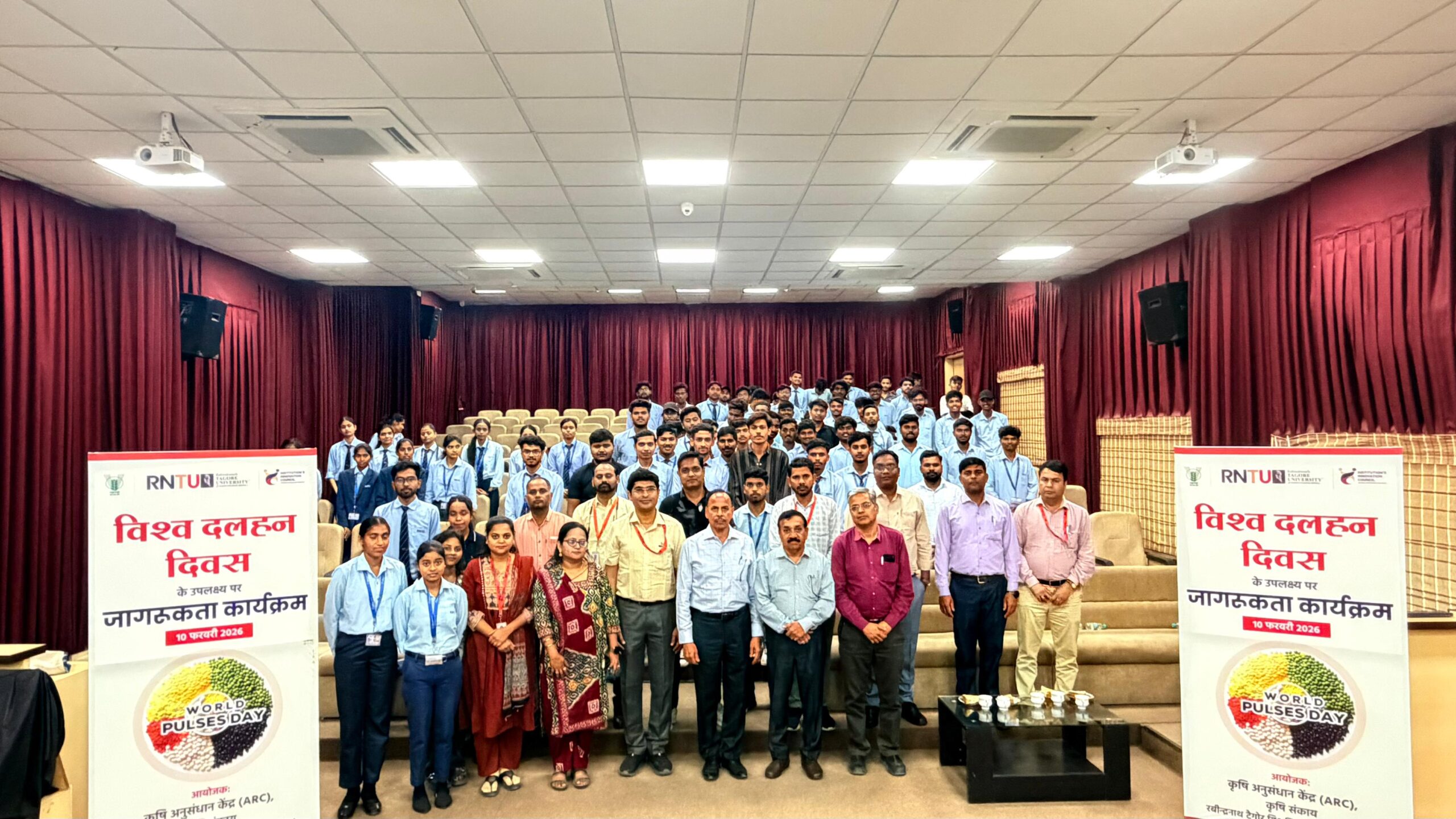
CNN Central News & Network–ITDC India Epress/ITDC News Bhopal: The Faculty of Agriculture at Rabindranath Tagore University, Bhopal, organized a special academic program on the occasion of World Pulses Day. The objective of the program was to create awareness among students about the nutritional importance of pulses, their role in sustainable agriculture, and the challenges associated with pulse production in India. More than 100 students participated in the event and gained valuable technical insights from experts.
The program was conducted and coordinated by Dr. Rishikesh Mandloi, Program Coordinator of the Faculty of Agriculture. In his address, he stated that pulses are an integral part of the Indian diet and a major source of protein in vegetarian food. He explained that pulse crops play a vital role in enhancing soil fertility through biological nitrogen fixation. He also highlighted challenges in pulse production due to climate change, pests and diseases, and changing cropping patterns.
Presiding over the program, Dean of the Faculty of Agriculture, Prof. H.D. Verma, expressed concern over malnutrition in rural areas and emphasized that pulses are an affordable, accessible, and high-quality source of protein, contributing significantly to nutritional security. He also shared information about various central and state government schemes aimed at increasing pulse production.
The keynote speaker of the program was Dr. A.N. Tikle, Principal Scientist (Pulses) from Rajmata Vijayaraje Scindia Agricultural University, Gwalior. He delivered a detailed lecture on the topic “Pulses in a Vegetarian Diet: A Major Source of Protein.” In his address, he discussed the global and national scenario of pulses, their nutritional value, and their role in food security. He also provided insights into production trends, international trade, and challenges faced by India in crops such as chickpea, pigeon pea, lentil, green gram, black gram, and peas.
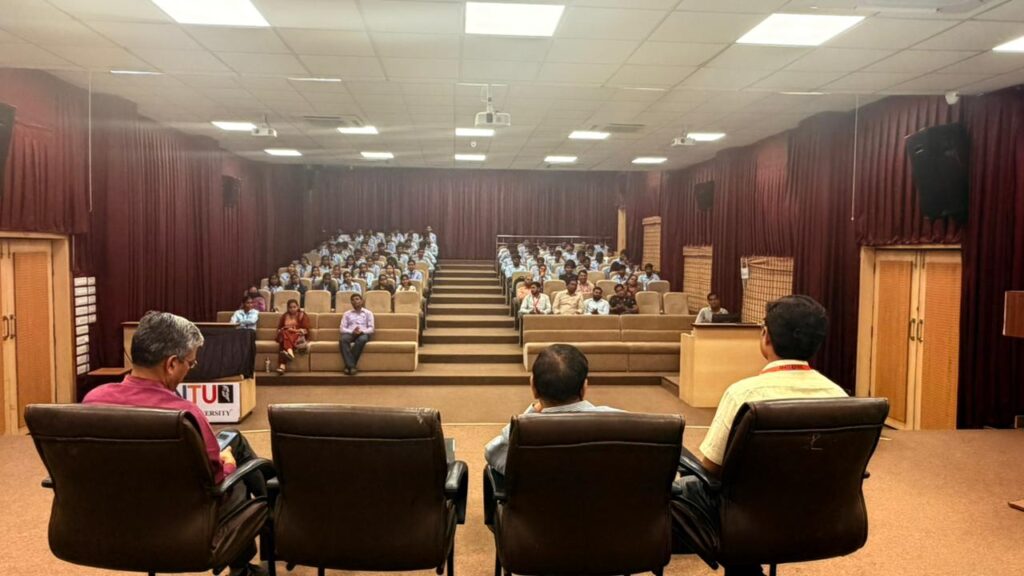
Dr. Tikle stated that despite being one of the largest producers and consumers of pulses in the world, India still faces several challenges in increasing production and productivity. He highlighted government schemes such as the National Agriculture Development Scheme, Pradhan Mantri Krishi Sinchai Yojana, and Sub-Mission on Agricultural Mechanization, which promote pulse production, irrigation facilities, and modern agricultural techniques. He also emphasized the importance of quality seed availability through certification, traceability, and integrated storage management initiatives.
He stressed the need to focus on improved varieties suited to Madhya Pradesh’s climate, modern crop management techniques, private sector participation, strengthening the agricultural ecosystem, and developing climate-resilient high-yield varieties.
Following the technical lecture, an interactive question-and-answer session was held where students asked various questions related to pulse production, improved varieties, climate change, pest and disease management, and government schemes. Dr. Tikle addressed these queries with scientific and practical solutions.
At the end of the program, Dr. Ashok Kumar Verma, Head of the Department of Agriculture, expressed gratitude to the chief guest, faculty members, students, and organizing committee. He stated that such academic events play a crucial role in acquainting students with contemporary challenges, innovations, and opportunities in the agricultural sector.
The event proved to be an important platform for students to understand the nutritional significance, production scenario, and future strategies related to pulses, and will contribute to raising awareness about sustainable agriculture, nutritional security, and rural development.