


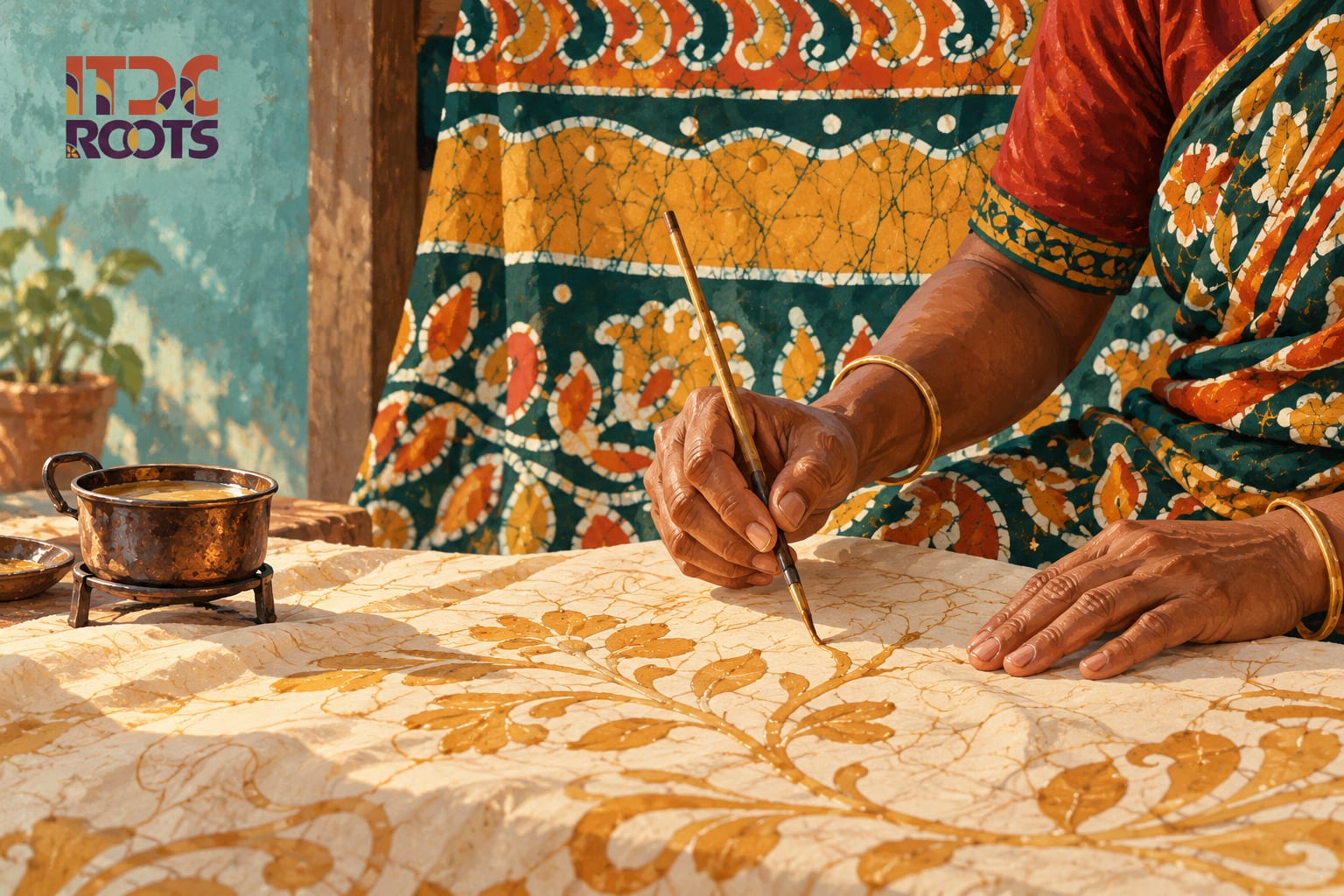
The first drawing on a length of Bherugarh batik may disappear before the cloth is sold. It is made in wax, which temporarily protects selected areas from dye. Once the wax is removed, its absence reveals the design: the artist has worked by deciding where colour should not enter.
Bherugarh, also called Bhairavgarh, lies beside Ujjain and the Shipra. Its workshops use blocks as well as freehand tools. A visit to Mohammed Iqbal Badawala’s workshop documented the artist Mohammed Tahir applying molten wax directly to stretched cloth. A simple stylus carried the hot material into flowers, creepers and flowing lines. The tool demanded a steady hand because the marks were made without a preliminary tracing.
The wax has to penetrate sufficiently to resist the dye while retaining the intended line. Cloth prepared for several colours passes through successive stages: areas that must keep an earlier shade are covered before another dye bath. The maker must anticipate the final arrangement while working on a surface partly concealed by wax.
Crackle adds a different kind of drawing. When a waxed area is bent or crumpled, fine breaks allow dye to enter. These branching lines can interrupt a broad field with a delicate network that cannot be repeated exactly. Madhya Pradesh Tourism describes this crushed effect as one of the techniques practised locally.
Removing the wax is another workshop operation. Hot water releases it from the fabric; washing and drying then expose the relationship between protected shapes, dyed grounds and fine cracks. The cloth that emerges may look spontaneous, but its colours have been kept apart through a planned sequence.
Bherugarh’s skill lives in that balance between intention and variation. A freehand curve follows the movement of a particular maker, while the crackled ground records how the waxed cloth was handled during dyeing.



