


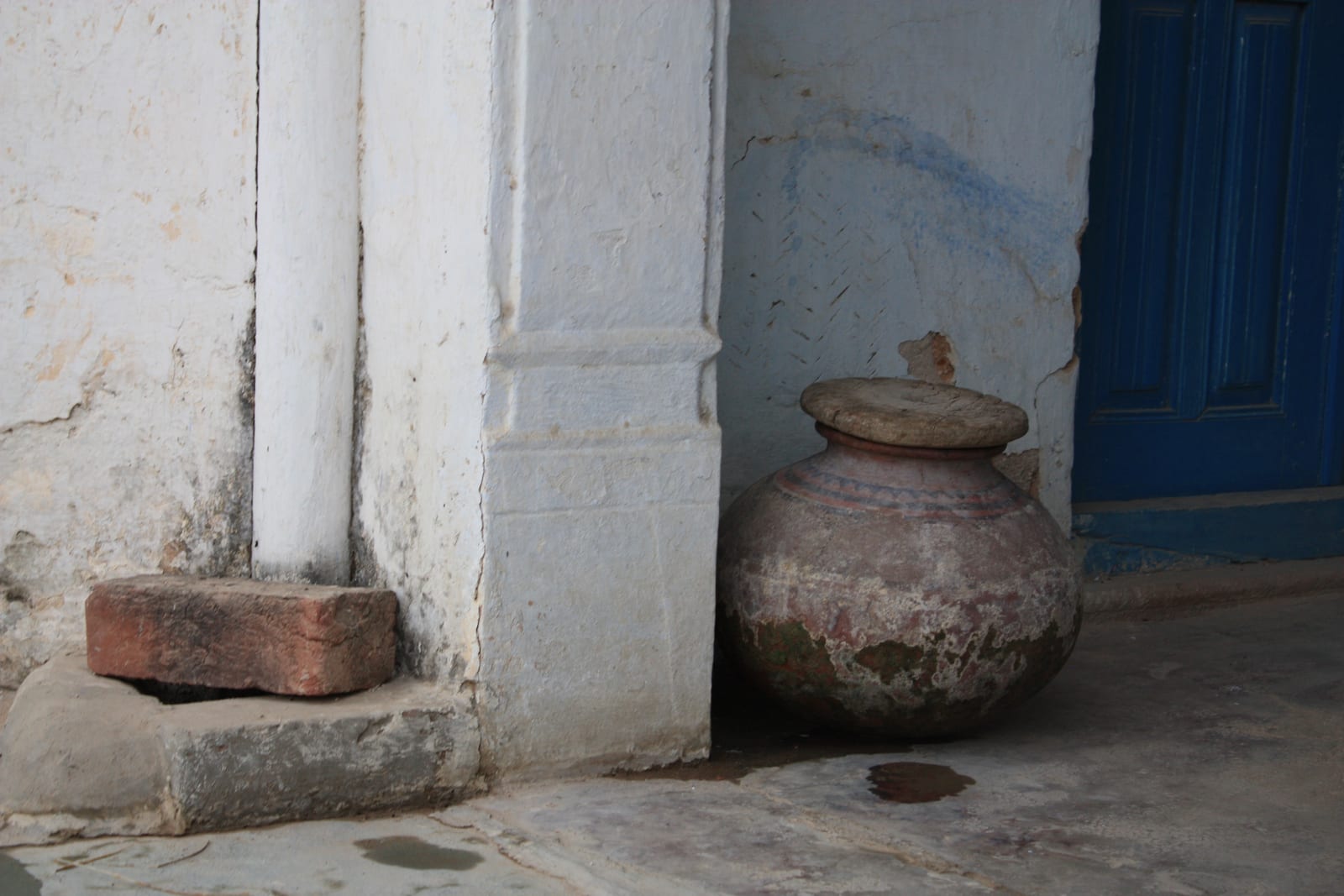
A matka has no plug, motor or humming compressor. Yet water poured from it on a hot afternoon can feel cooler than water kept in a metal vessel. The pot is doing something ordinary: allowing a little water to leave.
Unglazed earthenware contains tiny pores. Water works its way through these openings and reaches the outer surface, where it evaporates into the surrounding air. Changing from liquid to vapour requires energy. That energy comes from the pot, its contents and the surroundings, helping the water inside lose heat.
The same principle is familiar after a bath. Wet skin can feel cool as water evaporates from it. Sweat also carries heat away when it evaporates. The matka uses a porous wall to keep supplying its damp outer surface.
Weather makes a difference. In dry air, evaporation can proceed readily. When the air is already humid, evaporation slows, and the cooling is less effective. Moving air helps by carrying moisture away from the surface. This is why a matka cannot promise the same chill on a sticky monsoon day as on a dry summer afternoon.
Its material matters too. A waterproof glaze can block the pores that make this cooling possible. A steel bottle may hold water perfectly well, but its solid wall does not offer the same steady route to the outside.
There is a payment for the cool drink: some water is used up through evaporation. Nor can the pot keep cooling without limit. Heat continues to arrive from the warmer surroundings, and the temperature eventually reflects a balance between heat gained and heat lost.
The modest clay vessel is thus less like a sealed storage box and more like a carefully controlled exchange with the air. Every refreshing sip owes something to the water that never reaches the glass.




