


ITDC illustration
Before the road is wet, the scent arrives. A few drops strike dusty ground, and the air smells earthy. The rain seems to have brought a fragrance with it. Much of that fragrance, however, was waiting on the ground.
The smell associated with rain after dry weather is called petrichor. It is a mixture, rather than one single perfume. Oils originating from plants contribute, along with compounds made by organisms in the soil. One important ingredient is geosmin, a substance produced by certain microbes that has an earthy smell.
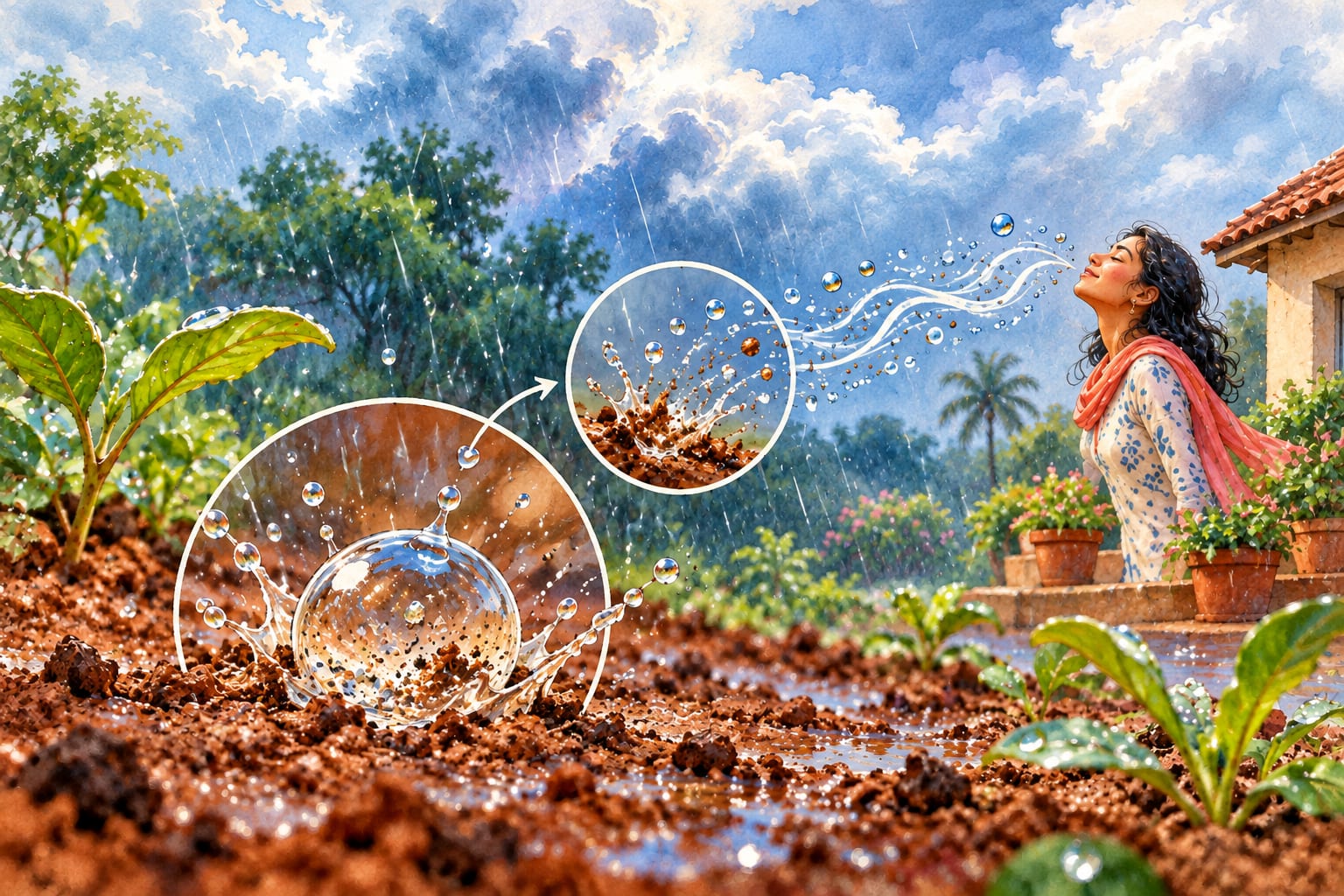
But how does something in the soil get into your nose? A raindrop can act as a tiny delivery system. Researchers at the Massachusetts Institute of Technology filmed drops striking porous surfaces. On impact, small air bubbles became trapped beneath the water. The bubbles rose and burst, throwing minute droplets into the air.
Those airborne droplets are aerosols. They can carry material from the surface, providing a route for earthy compounds to leave the ground. Air currents spread them. In the experiments, light and moderate rain could release more aerosols than very heavy rain under the conditions tested.
This helps explain why the first gentle shower after a dry spell can be so fragrant. Materials have accumulated on dry surfaces, and the arriving water helps send some of them airborne. A downpour need not produce a stronger scent simply because it contains more water.
Not every smell around a storm has the same source. Ozone can contribute a different, sharper smell in stormy weather. The warm, earthy note people usually associate with wet soil is another part of the story.
The next time that scent reaches you, consider its journey: from plants and microbes to soil, into a bursting bubble, and finally through the air. Rain has made the ground fragrant.



