


ITDC original illustration
From a train window, the stones beneath the rails can look like loose rubble. They are part of a carefully maintained structure. Known as ballast, this bed helps carry the weight of trains while keeping the track in its intended position.
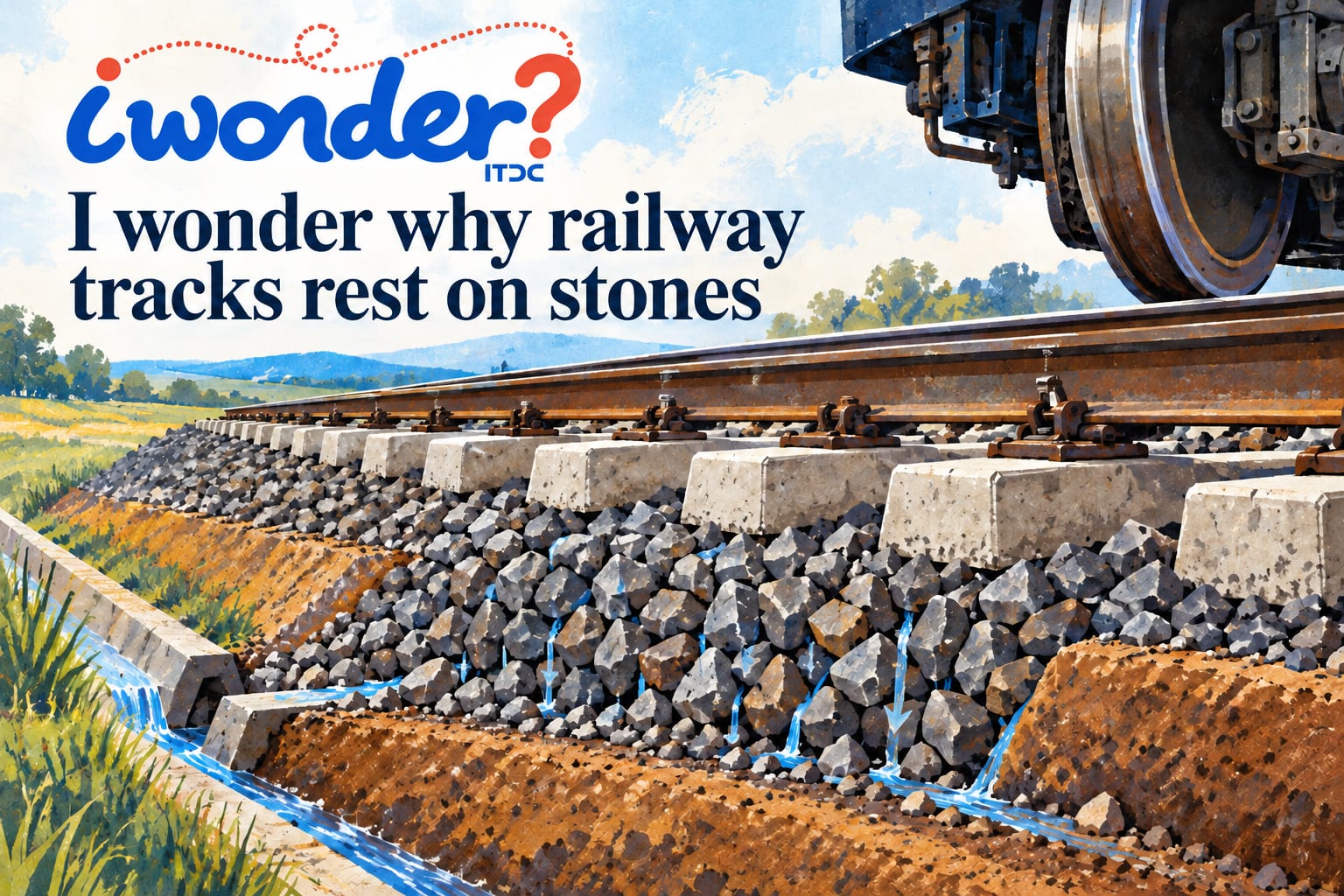
The load travels through several layers. Wheels press on steel rails, rails pass the force to sleepers, and sleepers spread it into the ballast below. The stone bed distributes that load over the prepared ground, rather than leaving each sleeper to press directly into the soil.
The shape of the stones matters. Crushed, angular pieces can interlock and resist movement. A bed of smooth, rounded pebbles would behave differently under loading. Ballast must also be tough enough to withstand crushing and wear as trains pass over it.
The spaces between the stones do useful work too. They allow water to drain through the bed towards the railway's drainage system. Keeping the track bed from becoming waterlogged is important because poorly drained ground can weaken the support beneath the rails.
Ballast is firm, but it is not a slab poured permanently into one shape. Maintenance machines can lift and align the track, then pack stones beneath the sleepers. This operation, called tamping, helps restore the correct level and support where repeated traffic has disturbed them.
Over time, stones wear and smaller particles collect in the gaps. Ballast may need cleaning or replacement so that it can support the track and drain effectively. The neat shoulders of stone alongside the sleepers also help resist sideways movement.
Not every railway uses this arrangement. Some tracks have a concrete supporting system instead. The choice depends on engineering needs.
That stony track is worth a second look from your seat. Beneath the polished rails is a foundation designed to carry, drain, grip and adjust.



