


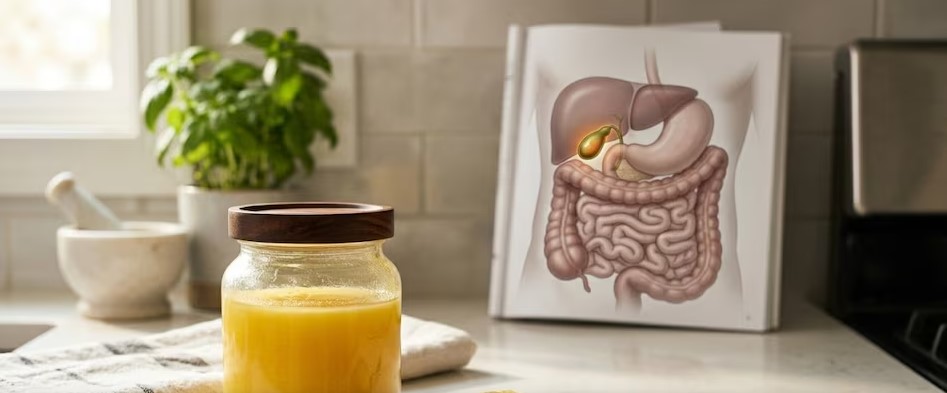
As awareness about health grows, people have begun reducing the use of oil and ghee in their diets. Many believe that ghee increases weight and cholesterol and should therefore be given up completely. However, liver specialist and Director of the Institute of Liver and Biliary Sciences (ILBS), Delhi, Dr Shiv Kumar Sarin says it is not right to consider ghee entirely bad. What is needed is that it should be consumed in balanced quantities and that daily total calorie intake should be kept in mind.
Speaking at the Health-Wealth Summit, Dr Sarin said home food is a better option, but every dish cooked at home does not automatically become healthy. Giving an example, he said that having three to four teaspoons of ghee in a meal does not mean the food is harmful. However, a balance with physical activity and calorie expenditure is also necessary.
Keeping count of calories is important
According to Dr Sarin, physical activity should correspond to the calories being taken into the body. Consuming more calories than required and not exercising can lead to weight gain and affect metabolic health. Ghee contains calories as well as saturated fat, so its quantity should be decided according to a person’s diet and health.
Four teaspoons are not right for everyone
The dietary guidelines of the National Institute of Nutrition of the Indian Council of Medical Research (ICMR) advise keeping ghee or butter limited. The World Health Organization also stresses keeping saturated fat intake low. People with high cholesterol, heart disease or weight-related problems should decide the quantity of ghee according to the advice of a doctor or dietitian.
The message from experts is clear: healthy eating does not mean completely giving up any one food item, but making balanced meals, limited quantities and regular physical activity part of one’s lifestyle.
Hashtags: #Health #Bhopal #HomeFood #HealthyEating #Ghee #Calories #SaturatedFat #DrShivKumarSarin #ILBS #IfHomeCookedFood



